
De Lempicka, Tamara


Introduction

| Tamara de Lempicka photographed in Paris during the height of the Art Deco era. |
|
“In her paintings everything is caressed with love and a meticulous brush... Her paintings remind us of the classics in museums but with infinitely more seduction and sensitivity. This is not really realistic painting: she could be called realistic if the term were enlarged. Her art is not cold despite its precision. Her portraits are alive and even hallucinatory.” Critic for Conmedia, May 22, 1930 |
Once described as the “most known unknown artist,” Tamara de Lempicka was a key figure in the Art Deco movement, whose luxurious Neo-Cubist paintings left an indelible mark on fine art and popular culture of the 1920s and 1930s. With a life marked by upheaval, reinvention and self-fashioning, De Lempicka transformed displacement into passionate artmaking.
Through dynamic portraits of modern society women, striking self-images and geometrically influenced depictions of the nude figure, De Lempicka established herself as an artist at the forefront of modern life. Her work fused glamour, discipline and sensuality into a style that remains unmistakably her own.
Although her oeuvre fell into relative obscurity in the decades following her peak creative years, renewed interest in Art Deco and increasing scholarly focus on women artists of the 20th century have returned De Lempicka to the center of the modern art conversation.
Early Life
Tamara Rosa Hurwitz was born in Warsaw, Poland, then part of Congress Poland within the Russian Empire, in 1894. Her father was a Russian-Jewish banking attorney, and her mother, Malwina, was a Polish-Jewish socialite. Raised in an affluent, cosmopolitan environment, Tamara spent much of her childhood under the care of her mother and grandparents after her father disappeared from her life.
At age 10, Tamara’s mother commissioned a local artist to create a pastel portrait of her daughter. Headstrong even as a child, Tamara disliked sitting still and was dissatisfied with the finished result. In response, she took the pastels herself, posed her younger sister and created what is considered her first portrait.
Although her family sent her to boarding school in Lausanne, Switzerland, at age 13, Tamara found the school inadequate and feigned illness in an attempt to return home. Instead, her grandmother took her on a tour of Italy, where she encountered the Old Masters. This early exposure to Renaissance painting would later inform the luminous surfaces and sculptural clarity of her portraits.
A New Life in Paris
After the Russian Revolution, Tamara’s family fled to Paris to escape persecution as members of the cultural elite. The Łempickis joined them there, hoping to rebuild their lives in France. This period was difficult for Tamara, who found herself in a foreign country, relatively penniless and anxious to provide stability for her daughter.

| Portrait of a Polo Player by De Lempicka. 1922. Oil on canvas. Private Collection. |
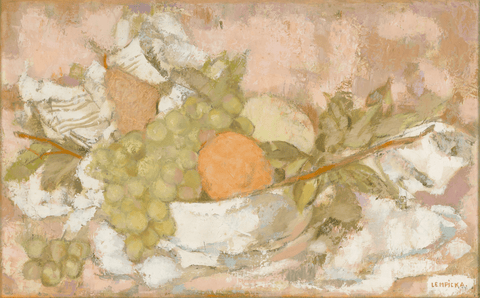
Taking this advice seriously, she studied at the Académie de la Grande Chaumière and the Académie Ranson under Maurice Denis and André Lhote, the latter often associated with Neo-Cubism. To support her family, she began selling still lifes and portraits of her daughter Kizette through Galerie Colette-Weil while also exhibiting at salons for promising young painters, including the Salon des Indépendants.
Breakout and Success
By 1925, Tamara had refined both her artistic style and public persona, adopting the name De Lempicka to suggest aristocratic distinction. That year, she exhibited at the Salon des Tuileries and the Salon des Femmes Peintres, while the Exposition Internationale des Arts Décoratifs et Industriels Modernes in Paris helped establish the visual vocabulary of Art Deco.

| Smiling Nude by De Lempicka. Circa 1928. Pencil on paper. M.S. Rau. |
|
“She became a portrait painter to make a living. It was a means to survive.” Tamara de Lempicka’s great-granddaughter |
Self-described as a workaholic, Tamara often worked nine-hour days, completing multiple sittings with different models. She received commissions from writers, journalists, Parisian society women, exiled Eastern European aristocrats and other members of fashionable society. It was in portraits of women that she most fully excelled.
In her female portraits, De Lempicka captured the spirit of the Roaring Twenties and the elegance of Art Deco, presenting her subjects with glamour, power and unmistakable individuality.
|
“A curious blend of extreme modernism and classical purity, [that] attracts and surprises...” Magdeleine Dayot, 1935 |
The De Lempicka Legacy
Even after De Lempicka’s death, her works continued to be exhibited, collected and rediscovered by new audiences. Celebrities including Madonna have collected her paintings, helping introduce the artist to broader popular culture.
|
“I have a Lempicka museum.” Madonna, Vanity Fair, 1990 |
Tamara de Lempicka’s works of the 1920s, characterized by glamour, independence and powerful portrayals of modern women, continue to exert an enduring influence on Modern Art and popular culture.
Continue Your ExplorationCollectors drawn to Tamara de Lempicka’s glamorous vision of modern femininity are invited to explore M.S. Rau’s curated selection of Art Deco works and exceptional fine art. |
De Lempicka, Tamara
Introduction
| Tamara de Lempicka photographed in Paris during the height of the Art Deco era. |
|
“In her paintings everything is caressed with love and a meticulous brush... Her paintings remind us of the classics in museums but with infinitely more seduction and sensitivity. This is not really realistic painting: she could be called realistic if the term were enlarged. Her art is not cold despite its precision. Her portraits are alive and even hallucinatory.” Critic for Conmedia, May 22, 1930 |
Once described as the “most known unknown artist,” Tamara de Lempicka was a key figure in the Art Deco movement, whose luxurious Neo-Cubist paintings left an indelible mark on fine art and popular culture of the 1920s and 1930s. With a life marked by upheaval, reinvention and self-fashioning, De Lempicka transformed displacement into passionate artmaking.
Through dynamic portraits of modern society women, striking self-images and geometrically influenced depictions of the nude figure, De Lempicka established herself as an artist at the forefront of modern life. Her work fused glamour, discipline and sensuality into a style that remains unmistakably her own.
Although her oeuvre fell into relative obscurity in the decades following her peak creative years, renewed interest in Art Deco and increasing scholarly focus on women artists of the 20th century have returned De Lempicka to the center of the modern art conversation.
Early Life
Tamara Rosa Hurwitz was born in Warsaw, Poland, then part of Congress Poland within the Russian Empire, in 1894. Her father was a Russian-Jewish banking attorney, and her mother, Malwina, was a Polish-Jewish socialite. Raised in an affluent, cosmopolitan environment, Tamara spent much of her childhood under the care of her mother and grandparents after her father disappeared from her life.
At age 10, Tamara’s mother commissioned a local artist to create a pastel portrait of her daughter. Headstrong even as a child, Tamara disliked sitting still and was dissatisfied with the finished result. In response, she took the pastels herself, posed her younger sister and created what is considered her first portrait.
Although her family sent her to boarding school in Lausanne, Switzerland, at age 13, Tamara found the school inadequate and feigned illness in an attempt to return home. Instead, her grandmother took her on a tour of Italy, where she encountered the Old Masters. This early exposure to Renaissance painting would later inform the luminous surfaces and sculptural clarity of her portraits.
A New Life in Paris
After the Russian Revolution, Tamara’s family fled to Paris to escape persecution as members of the cultural elite. The Łempickis joined them there, hoping to rebuild their lives in France. This period was difficult for Tamara, who found herself in a foreign country, relatively penniless and anxious to provide stability for her daughter.
| Portrait of a Polo Player by De Lempicka. 1922. Oil on canvas. Private Collection. |
Taking this advice seriously, she studied at the Académie de la Grande Chaumière and the Académie Ranson under Maurice Denis and André Lhote, the latter often associated with Neo-Cubism. To support her family, she began selling still lifes and portraits of her daughter Kizette through Galerie Colette-Weil while also exhibiting at salons for promising young painters, including the Salon des Indépendants.
Breakout and Success
By 1925, Tamara had refined both her artistic style and public persona, adopting the name De Lempicka to suggest aristocratic distinction. That year, she exhibited at the Salon des Tuileries and the Salon des Femmes Peintres, while the Exposition Internationale des Arts Décoratifs et Industriels Modernes in Paris helped establish the visual vocabulary of Art Deco.
| Smiling Nude by De Lempicka. Circa 1928. Pencil on paper. M.S. Rau. |
|
“She became a portrait painter to make a living. It was a means to survive.” Tamara de Lempicka’s great-granddaughter |
Self-described as a workaholic, Tamara often worked nine-hour days, completing multiple sittings with different models. She received commissions from writers, journalists, Parisian society women, exiled Eastern European aristocrats and other members of fashionable society. It was in portraits of women that she most fully excelled.
In her female portraits, De Lempicka captured the spirit of the Roaring Twenties and the elegance of Art Deco, presenting her subjects with glamour, power and unmistakable individuality.
|
“A curious blend of extreme modernism and classical purity, [that] attracts and surprises...” Magdeleine Dayot, 1935 |
The De Lempicka Legacy
Even after De Lempicka’s death, her works continued to be exhibited, collected and rediscovered by new audiences. Celebrities including Madonna have collected her paintings, helping introduce the artist to broader popular culture.
|
“I have a Lempicka museum.” Madonna, Vanity Fair, 1990 |
Tamara de Lempicka’s works of the 1920s, characterized by glamour, independence and powerful portrayals of modern women, continue to exert an enduring influence on Modern Art and popular culture.
Continue Your ExplorationCollectors drawn to Tamara de Lempicka’s glamorous vision of modern femininity are invited to explore M.S. Rau’s curated selection of Art Deco works and exceptional fine art. |


