

Godward, John William
Introduction
John William Godward remains one of the foremost painters of Victorian Neoclassicism and a leading figure of the so-called “Marble School,” a term used to describe artists renowned for their luminous depictions of Greco-Roman antiquity.
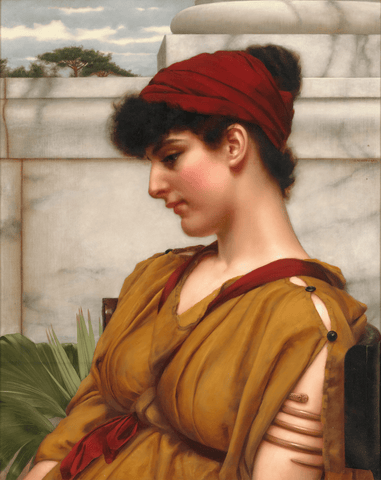
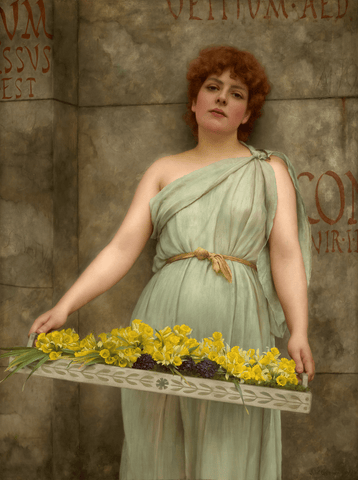
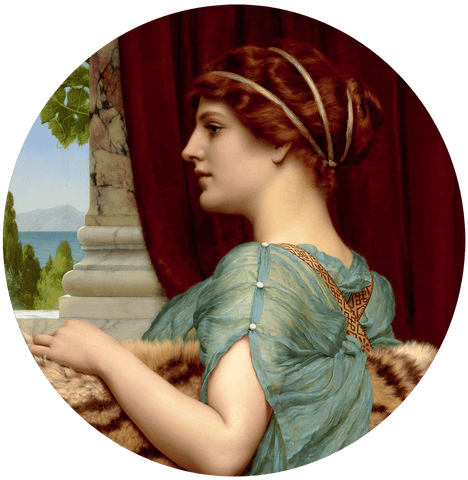
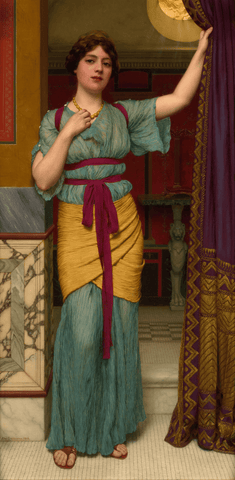
Frequently compared to Sir Lawrence Alma-Tadema, Godward became celebrated for his exquisitely detailed portrayals of beautiful women posed against marble terraces, classical architecture and Mediterranean landscapes. His paintings combined archaeological romanticism with extraordinary technical refinement, resulting in works prized for their serenity, elegance and tactile realism.
Although the artist’s canvases often depict scenes of tranquility and idealized beauty, Godward’s personal life was marked by emotional isolation, family estrangement and growing artistic disillusionment during the rise of Modernism.
Early Life and Education
John William Godward was born in August 1861 in Wimbledon, then a suburb of London, into a prosperous middle-class family. His father worked as an investment clerk at a life assurance agency and strongly encouraged his son to pursue a similarly stable professional career.
Though well educated and initially expected to follow his father into business, Godward ultimately rejected this path in favor of artistic training, a decision that reportedly caused deep and lasting tensions within his family.
His early artistic education included architectural studies under William Hoff Wontner and later William Clark Wontner while attending a local London art school. This training proved foundational to the precision and structural clarity that would later define his mature style.
Rise to Prominence
Godward’s professional breakthrough came in 1887 when his painting A Yellow Turban was accepted for exhibition at the Royal Academy.
The success of this exhibition established him within London’s competitive art world, and he continued exhibiting regularly at both the Royal Academy and the Royal Society of British Artists.
Godward also worked closely with prominent London dealers including Arthur Tooth and Thomas McLean, whose patronage helped expand his reputation among collectors of Victorian and Neoclassical art.
Throughout the late 19th century, Godward refined a highly recognizable visual language characterized by idealized female figures, polished marble surfaces, luxurious textiles and radiant Mediterranean settings.
His paintings frequently drew inspiration from ancient Greece and Rome, though they were less concerned with strict historical accuracy than with creating timeless scenes of beauty, leisure and sensual calm.
Technique and Style
Godward possessed an extraordinary ability to render texture and materiality with remarkable realism. Marble, silk, animal pelts, flowers and especially human skin were depicted with exceptional precision and luminosity.
His compositions reveal the influence of Sir Lawrence Alma-Tadema, though Godward often simplified narrative elements in favor of mood, atmosphere and decorative elegance.
The Marble School Aesthetic
Critics and scholars frequently associate Godward with the “Marble School,” a loosely connected group of Victorian Neoclassical painters fascinated by polished stone architecture, Mediterranean light and idealized antiquity.
Paintings such as Idle Thoughts exemplify this aesthetic through their harmonious compositions, refined color palettes and almost photographic attention to detail.
Godward’s mastery of flesh tones and drapery rivaled that of the finest Academic painters of the era, while his restrained emotional atmosphere distinguished his work from more theatrical Victorian narrative painting.
Italy and Personal Struggles
In 1912, Godward relocated to Italy, a move motivated both by his fascination with classical culture and by a romantic relationship with one of his Italian models.
This decision reportedly intensified tensions with his already disapproving family, who severed communication with him entirely. According to later accounts, Godward’s relatives were so ashamed of his artistic career that they removed his image from family photographs and later destroyed many of his personal papers following his death.
Despite these personal difficulties, Italy offered Godward direct access to the Mediterranean landscapes and classical atmosphere that had long inspired his paintings.
Decline of Academic Art and Death
By the early 20th century, artistic tastes had shifted dramatically. The rise of Modern Art, including Cubism and abstraction, increasingly marginalized Academic and Neoclassical painting.
While many artists adapted to changing styles, Godward remained steadfastly committed to his refined classical aesthetic.
He returned to London in 1921 but struggled deeply with the declining relevance of his work within the modern art world. In 1922, at the age of 61, Godward died by suicide.
|
“The world is not big enough for myself and a Picasso.” Attributed to John William Godward’s suicide note, 1922 |
The often-quoted statement has come to symbolize the profound divide between Academic classicism and the emerging modernist movements of the early 20th century.
Legacy
Although Godward’s work fell out of favor for much of the 20th century, renewed appreciation for Victorian Academic painting has restored his reputation among collectors, museums and scholars.
Today, his paintings are admired for their technical brilliance, idealized beauty and exceptional craftsmanship. His works continue to command strong interest within the market for fine art, particularly among collectors of Victorian and Neoclassical painting.
Godward remains one of the defining painters of the Marble School and one of the last great practitioners of Victorian Neoclassicism before the rise of Modernism transformed the artistic landscape forever.
Quick Facts
|
Continue Your ExplorationDiscover works by John William Godward and other masters of Victorian Neoclassicism through M.S. Rau’s curated collection of museum-quality fine art, featuring exceptional paintings from the 19th and early 20th centuries. |
Godward, John William
Introduction
John William Godward remains one of the foremost painters of Victorian Neoclassicism and a leading figure of the so-called “Marble School,” a term used to describe artists renowned for their luminous depictions of Greco-Roman antiquity.
Frequently compared to Sir Lawrence Alma-Tadema, Godward became celebrated for his exquisitely detailed portrayals of beautiful women posed against marble terraces, classical architecture and Mediterranean landscapes. His paintings combined archaeological romanticism with extraordinary technical refinement, resulting in works prized for their serenity, elegance and tactile realism.
Although the artist’s canvases often depict scenes of tranquility and idealized beauty, Godward’s personal life was marked by emotional isolation, family estrangement and growing artistic disillusionment during the rise of Modernism.
Early Life and Education
John William Godward was born in August 1861 in Wimbledon, then a suburb of London, into a prosperous middle-class family. His father worked as an investment clerk at a life assurance agency and strongly encouraged his son to pursue a similarly stable professional career.
Though well educated and initially expected to follow his father into business, Godward ultimately rejected this path in favor of artistic training, a decision that reportedly caused deep and lasting tensions within his family.
His early artistic education included architectural studies under William Hoff Wontner and later William Clark Wontner while attending a local London art school. This training proved foundational to the precision and structural clarity that would later define his mature style.
Rise to Prominence
Godward’s professional breakthrough came in 1887 when his painting A Yellow Turban was accepted for exhibition at the Royal Academy.
The success of this exhibition established him within London’s competitive art world, and he continued exhibiting regularly at both the Royal Academy and the Royal Society of British Artists.
Godward also worked closely with prominent London dealers including Arthur Tooth and Thomas McLean, whose patronage helped expand his reputation among collectors of Victorian and Neoclassical art.
Throughout the late 19th century, Godward refined a highly recognizable visual language characterized by idealized female figures, polished marble surfaces, luxurious textiles and radiant Mediterranean settings.
His paintings frequently drew inspiration from ancient Greece and Rome, though they were less concerned with strict historical accuracy than with creating timeless scenes of beauty, leisure and sensual calm.
Technique and Style
Godward possessed an extraordinary ability to render texture and materiality with remarkable realism. Marble, silk, animal pelts, flowers and especially human skin were depicted with exceptional precision and luminosity.
His compositions reveal the influence of Sir Lawrence Alma-Tadema, though Godward often simplified narrative elements in favor of mood, atmosphere and decorative elegance.
The Marble School Aesthetic
Critics and scholars frequently associate Godward with the “Marble School,” a loosely connected group of Victorian Neoclassical painters fascinated by polished stone architecture, Mediterranean light and idealized antiquity.
Paintings such as Idle Thoughts exemplify this aesthetic through their harmonious compositions, refined color palettes and almost photographic attention to detail.
Godward’s mastery of flesh tones and drapery rivaled that of the finest Academic painters of the era, while his restrained emotional atmosphere distinguished his work from more theatrical Victorian narrative painting.
Italy and Personal Struggles
In 1912, Godward relocated to Italy, a move motivated both by his fascination with classical culture and by a romantic relationship with one of his Italian models.
This decision reportedly intensified tensions with his already disapproving family, who severed communication with him entirely. According to later accounts, Godward’s relatives were so ashamed of his artistic career that they removed his image from family photographs and later destroyed many of his personal papers following his death.
Despite these personal difficulties, Italy offered Godward direct access to the Mediterranean landscapes and classical atmosphere that had long inspired his paintings.
Decline of Academic Art and Death
By the early 20th century, artistic tastes had shifted dramatically. The rise of Modern Art, including Cubism and abstraction, increasingly marginalized Academic and Neoclassical painting.
While many artists adapted to changing styles, Godward remained steadfastly committed to his refined classical aesthetic.
He returned to London in 1921 but struggled deeply with the declining relevance of his work within the modern art world. In 1922, at the age of 61, Godward died by suicide.
|
“The world is not big enough for myself and a Picasso.” Attributed to John William Godward’s suicide note, 1922 |
The often-quoted statement has come to symbolize the profound divide between Academic classicism and the emerging modernist movements of the early 20th century.
Legacy
Although Godward’s work fell out of favor for much of the 20th century, renewed appreciation for Victorian Academic painting has restored his reputation among collectors, museums and scholars.
Today, his paintings are admired for their technical brilliance, idealized beauty and exceptional craftsmanship. His works continue to command strong interest within the market for fine art, particularly among collectors of Victorian and Neoclassical painting.
Godward remains one of the defining painters of the Marble School and one of the last great practitioners of Victorian Neoclassicism before the rise of Modernism transformed the artistic landscape forever.
Quick Facts
|
Continue Your ExplorationDiscover works by John William Godward and other masters of Victorian Neoclassicism through M.S. Rau’s curated collection of museum-quality fine art, featuring exceptional paintings from the 19th and early 20th centuries. |

