
Moret, Henry
Introduction
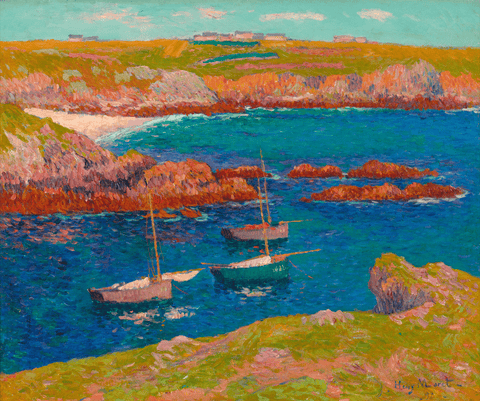
Henry Moret occupies a distinctive place within the history of French Post-Impressionism. Best known for his luminous landscapes of Brittany, Moret developed a highly personal artistic language that blended the atmospheric sensitivity of Impressionism with the expressive color and simplified forms associated with the Pont-Aven School.
Though often overshadowed by contemporaries such as Paul Gauguin and Émile Bernard, Moret emerged as one of the most accomplished interpreters of the Breton landscape at the turn of the 20th century. His paintings are celebrated for their vibrant palettes, dynamic brushwork and profound emotional connection to nature.
Personal Background
Henry François Moret was born on December 12, 1856, in Cherbourg, France. Raised near the Normandy coast, Moret developed an early appreciation for the dramatic interplay of sea, sky and landscape that would later define much of his artistic oeuvre.
He studied at the École des Beaux-Arts in Paris under influential academic painters Jean-Léon Gérôme and Jules-Élie Delaunay. This formal training provided Moret with a strong technical foundation rooted in traditional draftsmanship and composition.
Despite his academic education, Moret increasingly gravitated toward the more progressive artistic movements emerging in France during the late 19th century.
His artistic trajectory changed significantly after becoming associated with the Pont-Aven School in Brittany, where he encountered artists including Paul Gauguin and Émile Bernard. The collaborative and experimental atmosphere of Pont-Aven encouraged Moret to move beyond strict academic realism and toward a more expressive approach to landscape painting.
Academic Foundations (1875–1890)
Moret’s earliest paintings reveal the influence of both academic training and the Barbizon School’s devotion to naturalistic landscape painting.
Works from this period often feature carefully observed rural scenes rendered with subdued coloration and meticulous attention to detail.
Paintings such as Landscape at the Edge of the Forest demonstrate his growing sensitivity to atmospheric effects while still reflecting the compositional discipline associated with academic painting traditions.
Even during these formative years, however, Moret displayed an emerging fascination with the expressive possibilities of light and color.
The Pont-Aven Years (1891–1900)
Moret’s involvement with the Pont-Aven School marked the decisive turning point in his artistic development.
Influenced by Gauguin’s bold use of color and flattened compositional structures, Moret adopted a brighter palette and increasingly expressive brushwork.
Unlike Gauguin’s more symbolic and often spiritual compositions, however, Moret remained deeply devoted to direct observation of the natural world.
During this period, he produced some of his most celebrated Breton coastal scenes, including Rocks at Le Pouldu and The Bay of Douarnenez.
These works capture the rugged coastline of Brittany through sweeping forms, heightened color contrasts and a remarkable sensitivity to changing weather and light conditions.
|
“Henry Moret’s paintings are a testament to his profound connection to the natural world and his ability to convey its beauty and emotion through his unique artistic vision.” Art historian André Cariou |
The Pont-Aven community provided Moret with both creative support and exhibition opportunities, helping establish his reputation within avant-garde artistic circles.
Mature Period (1901–1913)
By the early 20th century, Moret had fully developed the mature style for which he is best remembered.
His brushwork became freer and more energetic, while his color palette grew increasingly vibrant and luminous.
Works such as The Island of Groix and The Port of Doëlan exemplify this mature phase, characterized by rhythmic compositions and richly expressive handling of paint.
Although Moret absorbed elements of emerging Fauvist experimentation, particularly in his intensified use of color, he never abandoned his commitment to depicting the natural landscape.
Instead, he fused expressive modern color with direct observation, creating works that balance emotional intensity with atmospheric realism.
Legacy and Influence
In his later years, Moret continued painting the landscapes of Brittany with extraordinary sensitivity and consistency.
Late works such as Sunset over the Sea reveal a quieter and more contemplative approach, often employing more harmonious tonal relationships while preserving the expressive vitality that defined his career.
Moret died in Paris in 1913, leaving behind a body of work that bridged Impressionism, Symbolism and early modernism.
Today, his paintings are increasingly appreciated for their unique synthesis of Impressionist observation and Post-Impressionist expression. His works remain represented in important museum collections and continue to attract collectors drawn to the rich artistic legacy of Brittany and the Pont-Aven School.
Collectors seeking exceptional examples of Post-Impressionist and French landscape painting are invited to explore M.S. Rau’s curated collection of museum-quality fine art.
Quick Facts
|
Continue Your ExplorationExplore works by Henry Moret and other masters of Post-Impressionism through M.S. Rau’s curated collection of museum-quality fine art spanning the defining artistic movements of the 19th and early 20th centuries. |
Moret, Henry
Introduction
Henry Moret occupies a distinctive place within the history of French Post-Impressionism. Best known for his luminous landscapes of Brittany, Moret developed a highly personal artistic language that blended the atmospheric sensitivity of Impressionism with the expressive color and simplified forms associated with the Pont-Aven School.
Though often overshadowed by contemporaries such as Paul Gauguin and Émile Bernard, Moret emerged as one of the most accomplished interpreters of the Breton landscape at the turn of the 20th century. His paintings are celebrated for their vibrant palettes, dynamic brushwork and profound emotional connection to nature.
Personal Background
Henry François Moret was born on December 12, 1856, in Cherbourg, France. Raised near the Normandy coast, Moret developed an early appreciation for the dramatic interplay of sea, sky and landscape that would later define much of his artistic oeuvre.
He studied at the École des Beaux-Arts in Paris under influential academic painters Jean-Léon Gérôme and Jules-Élie Delaunay. This formal training provided Moret with a strong technical foundation rooted in traditional draftsmanship and composition.
Despite his academic education, Moret increasingly gravitated toward the more progressive artistic movements emerging in France during the late 19th century.
His artistic trajectory changed significantly after becoming associated with the Pont-Aven School in Brittany, where he encountered artists including Paul Gauguin and Émile Bernard. The collaborative and experimental atmosphere of Pont-Aven encouraged Moret to move beyond strict academic realism and toward a more expressive approach to landscape painting.
Academic Foundations (1875–1890)
Moret’s earliest paintings reveal the influence of both academic training and the Barbizon School’s devotion to naturalistic landscape painting.
Works from this period often feature carefully observed rural scenes rendered with subdued coloration and meticulous attention to detail.
Paintings such as Landscape at the Edge of the Forest demonstrate his growing sensitivity to atmospheric effects while still reflecting the compositional discipline associated with academic painting traditions.
Even during these formative years, however, Moret displayed an emerging fascination with the expressive possibilities of light and color.
The Pont-Aven Years (1891–1900)
Moret’s involvement with the Pont-Aven School marked the decisive turning point in his artistic development.
Influenced by Gauguin’s bold use of color and flattened compositional structures, Moret adopted a brighter palette and increasingly expressive brushwork.
Unlike Gauguin’s more symbolic and often spiritual compositions, however, Moret remained deeply devoted to direct observation of the natural world.
During this period, he produced some of his most celebrated Breton coastal scenes, including Rocks at Le Pouldu and The Bay of Douarnenez.
These works capture the rugged coastline of Brittany through sweeping forms, heightened color contrasts and a remarkable sensitivity to changing weather and light conditions.
|
“Henry Moret’s paintings are a testament to his profound connection to the natural world and his ability to convey its beauty and emotion through his unique artistic vision.” Art historian André Cariou |
The Pont-Aven community provided Moret with both creative support and exhibition opportunities, helping establish his reputation within avant-garde artistic circles.
Mature Period (1901–1913)
By the early 20th century, Moret had fully developed the mature style for which he is best remembered.
His brushwork became freer and more energetic, while his color palette grew increasingly vibrant and luminous.
Works such as The Island of Groix and The Port of Doëlan exemplify this mature phase, characterized by rhythmic compositions and richly expressive handling of paint.
Although Moret absorbed elements of emerging Fauvist experimentation, particularly in his intensified use of color, he never abandoned his commitment to depicting the natural landscape.
Instead, he fused expressive modern color with direct observation, creating works that balance emotional intensity with atmospheric realism.
Legacy and Influence
In his later years, Moret continued painting the landscapes of Brittany with extraordinary sensitivity and consistency.
Late works such as Sunset over the Sea reveal a quieter and more contemplative approach, often employing more harmonious tonal relationships while preserving the expressive vitality that defined his career.
Moret died in Paris in 1913, leaving behind a body of work that bridged Impressionism, Symbolism and early modernism.
Today, his paintings are increasingly appreciated for their unique synthesis of Impressionist observation and Post-Impressionist expression. His works remain represented in important museum collections and continue to attract collectors drawn to the rich artistic legacy of Brittany and the Pont-Aven School.
Collectors seeking exceptional examples of Post-Impressionist and French landscape painting are invited to explore M.S. Rau’s curated collection of museum-quality fine art.
Quick Facts
|
Continue Your ExplorationExplore works by Henry Moret and other masters of Post-Impressionism through M.S. Rau’s curated collection of museum-quality fine art spanning the defining artistic movements of the 19th and early 20th centuries. |


