
Morisot, Berthe
|
“There are no lines in nature, only areas of color, one against another. Berthe Morisot has demonstrated this better than anyone.” Édouard Manet |
Berthe Morisot is celebrated as one of art history’s leading female artists and one of the founding members of French Impressionism. A pioneering figure in 19th-century art, Morisot helped shape the visual identity of the Impressionist movement through her luminous palettes, loose brushwork and intimate depictions of modern life.
The only woman to exhibit in the first Impressionist exhibition of 1874, Morisot overcame the significant social restrictions placed upon women artists of her era. Though barred from formal study at the École des Beaux-Arts, she pursued rigorous private artistic training and developed a highly original style that earned the admiration of contemporaries including Edgar Degas, Claude Monet and Édouard Manet.
Early Life & Education
Berthe Morisot was born in Bourges, France, in 1841 into a wealthy and well-connected family whose social standing allowed her unusual access to artistic education. Her father, Edmé Tiburce Morisot, was a high-ranking government official who encouraged both Berthe and her sister Edma in their artistic pursuits.
Like many upper-class women of the period, Morisot received private instruction rather than formal academic training. Her parents established a studio in the family home where the sisters could study and paint under professional tutors.
Among her earliest instructors was the painter Joseph Guichard, who introduced Morisot to the Parisian art world and encouraged her to study Old Master paintings at the Louvre. During this period, she also came under the influence of Jean-Honoré Fragonard, to whom she was distantly related.
Morisot’s artistic development was profoundly shaped by the landscape painter Camille Corot, a leading figure of the Barbizon School. Corot introduced her to en plein air painting and encouraged direct observation of nature — techniques that would later become central to Impressionism.
By 1864, Morisot began exhibiting at the Paris Salon, signaling her determination to establish herself professionally within the male-dominated art world. Her early works demonstrated careful draftsmanship and realism, though her increasingly experimental brushwork hinted at the artistic innovations to come.
Founder of a Movement
French Impressionism emerged during the second half of the 19th century as a radical rejection of rigid academic painting traditions. Rather than depicting historical or religious subjects, Impressionist artists sought to capture fleeting moments of modern life, atmospheric light and contemporary leisure.
Although the movement was dominated by male artists such as Claude Monet, Pierre-Auguste Renoir, Camille Pissarro, Alfred Sisley and Edgar Degas, Morisot quickly proved herself an indispensable participant within the avant-garde circle.
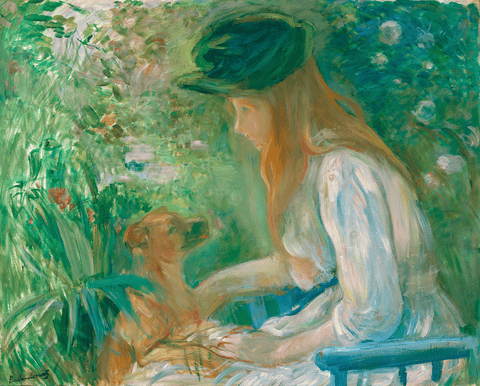
Unlike many of her contemporaries, who frequently painted cafés, theaters and urban boulevards, Morisot focused primarily on domestic interiors, gardens and intimate scenes of women and children. Because social conventions restricted where upper-class women could travel unaccompanied, Morisot transformed these private settings into profound artistic subjects.
Her paintings offered a distinctly female perspective rarely seen in 19th-century art. Rather than objectifying her subjects, Morisot depicted women with psychological depth, independence and emotional complexity.
From 1864 through 1873, Morisot regularly exhibited at the official Paris Salon. In 1874, however, she joined the newly formed Société Anonyme Coopérative des Artistes Peintres, Sculpteurs, Graveurs — the independent exhibiting group that would soon become known as the Impressionists.
Working alongside Renoir, Degas, Pissarro and Monet, Morisot participated in all but one of the group’s Impressionist exhibitions, helping establish the movement as one of the most influential artistic revolutions in modern history.
Famous Friendship
The artistic relationship between Berthe Morisot and Édouard Manet remains one of the most fascinating partnerships in 19th-century art.
Drawn together by shared artistic ambitions and a mutual commitment to modern subject matter, the two artists developed a close personal and professional bond. Manet painted Morisot at least twelve times — more frequently than any other model — and retained several of these portraits in his personal collection until his death.
Some historians have speculated about the emotional nature of their relationship, though definitive evidence remains elusive. What is certain is that the two artists deeply respected one another’s talents.
Because of social expectations surrounding women’s reputations during the period, Morisot’s mother often accompanied her during studio sittings with Manet.
In 1874, Morisot married Manet’s younger brother, Eugène Manet, who became one of her greatest supporters and advocates. Unlike many husbands of the era, Eugène actively encouraged Morisot’s artistic career and frequently assisted with managing her exhibitions and professional affairs.
Morisot later painted Eugène and their daughter Julie in several tender family portraits that reveal the warmth and emotional intimacy characteristic of her mature work.
Emotional Sensitivity
Like many Impressionists, Morisot treated art as inseparable from modern life itself. Yet her perspective remained uniquely personal and psychologically nuanced.
Because social conventions limited her access to many public spaces frequented by male Impressionists — including cafés, theaters and dance halls — Morisot instead explored the emotional richness of domestic life.
Many of her most celebrated paintings depict women reading, caring for children, sitting in gardens or engaged in quiet contemplation. These works emphasize emotional atmosphere over narrative drama.
Scholars have frequently noted that Morisot portrayed women not as passive objects of observation, but as active individuals possessing inner lives and intellectual presence.
Her fluid brushwork, delicate tonal harmonies and unfinished surfaces contributed to a sense of immediacy and spontaneity that became hallmarks of Impressionist painting.
Despite the societal limitations imposed upon upper-class women of her era, Morisot demonstrated remarkable independence, ambition and artistic confidence throughout her career.
Legacy
Today, Berthe Morisot is recognized as one of the defining figures of Impressionism and among the most important female artists in Western art history.
Her drawings, watercolors and paintings are represented in major museum collections throughout the world, including the Metropolitan Museum of Art, the National Gallery of Art, the Musée Marmottan Monet, the Musée d’Orsay and the Louvre.
Long overshadowed by some of her male contemporaries, Morisot’s work has received increasing scholarly and public recognition in recent decades for its technical sophistication, psychological insight and groundbreaking role in the development of modern art.
Berthe Morisot’s paintings remain highly sought after by collectors for their elegance, emotional subtlety and distinctly modern vision.
Quick Facts
|
Continue Your ExplorationExplore works by Berthe Morisot and other masters of French Impressionism through M.S. Rau’s curated collection of museum-quality fine art spanning the defining artistic movements of the 19th century. |
Morisot, Berthe
|
“There are no lines in nature, only areas of color, one against another. Berthe Morisot has demonstrated this better than anyone.” Édouard Manet |
Berthe Morisot is celebrated as one of art history’s leading female artists and one of the founding members of French Impressionism. A pioneering figure in 19th-century art, Morisot helped shape the visual identity of the Impressionist movement through her luminous palettes, loose brushwork and intimate depictions of modern life.
The only woman to exhibit in the first Impressionist exhibition of 1874, Morisot overcame the significant social restrictions placed upon women artists of her era. Though barred from formal study at the École des Beaux-Arts, she pursued rigorous private artistic training and developed a highly original style that earned the admiration of contemporaries including Edgar Degas, Claude Monet and Édouard Manet.
Early Life & Education
Berthe Morisot was born in Bourges, France, in 1841 into a wealthy and well-connected family whose social standing allowed her unusual access to artistic education. Her father, Edmé Tiburce Morisot, was a high-ranking government official who encouraged both Berthe and her sister Edma in their artistic pursuits.
Like many upper-class women of the period, Morisot received private instruction rather than formal academic training. Her parents established a studio in the family home where the sisters could study and paint under professional tutors.
Among her earliest instructors was the painter Joseph Guichard, who introduced Morisot to the Parisian art world and encouraged her to study Old Master paintings at the Louvre. During this period, she also came under the influence of Jean-Honoré Fragonard, to whom she was distantly related.
Morisot’s artistic development was profoundly shaped by the landscape painter Camille Corot, a leading figure of the Barbizon School. Corot introduced her to en plein air painting and encouraged direct observation of nature — techniques that would later become central to Impressionism.
By 1864, Morisot began exhibiting at the Paris Salon, signaling her determination to establish herself professionally within the male-dominated art world. Her early works demonstrated careful draftsmanship and realism, though her increasingly experimental brushwork hinted at the artistic innovations to come.
Founder of a Movement
French Impressionism emerged during the second half of the 19th century as a radical rejection of rigid academic painting traditions. Rather than depicting historical or religious subjects, Impressionist artists sought to capture fleeting moments of modern life, atmospheric light and contemporary leisure.
Although the movement was dominated by male artists such as Claude Monet, Pierre-Auguste Renoir, Camille Pissarro, Alfred Sisley and Edgar Degas, Morisot quickly proved herself an indispensable participant within the avant-garde circle.
Unlike many of her contemporaries, who frequently painted cafés, theaters and urban boulevards, Morisot focused primarily on domestic interiors, gardens and intimate scenes of women and children. Because social conventions restricted where upper-class women could travel unaccompanied, Morisot transformed these private settings into profound artistic subjects.
Her paintings offered a distinctly female perspective rarely seen in 19th-century art. Rather than objectifying her subjects, Morisot depicted women with psychological depth, independence and emotional complexity.
From 1864 through 1873, Morisot regularly exhibited at the official Paris Salon. In 1874, however, she joined the newly formed Société Anonyme Coopérative des Artistes Peintres, Sculpteurs, Graveurs — the independent exhibiting group that would soon become known as the Impressionists.
Working alongside Renoir, Degas, Pissarro and Monet, Morisot participated in all but one of the group’s Impressionist exhibitions, helping establish the movement as one of the most influential artistic revolutions in modern history.
Famous Friendship
The artistic relationship between Berthe Morisot and Édouard Manet remains one of the most fascinating partnerships in 19th-century art.
Drawn together by shared artistic ambitions and a mutual commitment to modern subject matter, the two artists developed a close personal and professional bond. Manet painted Morisot at least twelve times — more frequently than any other model — and retained several of these portraits in his personal collection until his death.
Some historians have speculated about the emotional nature of their relationship, though definitive evidence remains elusive. What is certain is that the two artists deeply respected one another’s talents.
Because of social expectations surrounding women’s reputations during the period, Morisot’s mother often accompanied her during studio sittings with Manet.
In 1874, Morisot married Manet’s younger brother, Eugène Manet, who became one of her greatest supporters and advocates. Unlike many husbands of the era, Eugène actively encouraged Morisot’s artistic career and frequently assisted with managing her exhibitions and professional affairs.
Morisot later painted Eugène and their daughter Julie in several tender family portraits that reveal the warmth and emotional intimacy characteristic of her mature work.
Emotional Sensitivity
Like many Impressionists, Morisot treated art as inseparable from modern life itself. Yet her perspective remained uniquely personal and psychologically nuanced.
Because social conventions limited her access to many public spaces frequented by male Impressionists — including cafés, theaters and dance halls — Morisot instead explored the emotional richness of domestic life.
Many of her most celebrated paintings depict women reading, caring for children, sitting in gardens or engaged in quiet contemplation. These works emphasize emotional atmosphere over narrative drama.
Scholars have frequently noted that Morisot portrayed women not as passive objects of observation, but as active individuals possessing inner lives and intellectual presence.
Her fluid brushwork, delicate tonal harmonies and unfinished surfaces contributed to a sense of immediacy and spontaneity that became hallmarks of Impressionist painting.
Despite the societal limitations imposed upon upper-class women of her era, Morisot demonstrated remarkable independence, ambition and artistic confidence throughout her career.
Legacy
Today, Berthe Morisot is recognized as one of the defining figures of Impressionism and among the most important female artists in Western art history.
Her drawings, watercolors and paintings are represented in major museum collections throughout the world, including the Metropolitan Museum of Art, the National Gallery of Art, the Musée Marmottan Monet, the Musée d’Orsay and the Louvre.
Long overshadowed by some of her male contemporaries, Morisot’s work has received increasing scholarly and public recognition in recent decades for its technical sophistication, psychological insight and groundbreaking role in the development of modern art.
Berthe Morisot’s paintings remain highly sought after by collectors for their elegance, emotional subtlety and distinctly modern vision.
Quick Facts
|
Continue Your ExplorationExplore works by Berthe Morisot and other masters of French Impressionism through M.S. Rau’s curated collection of museum-quality fine art spanning the defining artistic movements of the 19th century. |


