
Heyman, Oscar





Introduction
For more than a century, Oscar Heyman has stood among the most respected names in American fine jewelry. Revered within the industry as “The Jewelers’ Jeweler,” the firm earned this distinction through its extraordinary craftsmanship, technical innovation and access to some of the world’s rarest and most exceptional gemstones.
Known for working with vivid Paraíba tourmalines, moonstones, colored sapphires, cat’s-eye chrysoberyls and important diamonds, Oscar Heyman developed a reputation for uncompromising quality and meticulous hand fabrication.
Today, the firm remains celebrated for creating some of the finest jewelry of the 20th and 21st centuries, combining exceptional gemstones with impeccable American craftsmanship.
The Formative Years
Oscar Heyman was born in Latvia in 1888. After briefly working in his uncle’s jewelry factory in Ukraine, he immigrated to New York in 1906 with his brother Nathan. Their brother Harry joined them shortly thereafter in 1907.
Oscar quickly found work in the jewelry trade and notably became the first non-French jeweler employed by Cartier.
Meanwhile, Nathan worked as a machinist for Western Electric. Both brothers became highly skilled in working with platinum, then still a relatively new and technically demanding material in jewelry production.
Their combined expertise in engineering, gem-setting and design laid the foundation for one of the most influential jewelry houses in American history.
In 1912, the brothers founded Oscar Heyman & Brothers in New York City. Nearly all of their other siblings eventually joined the business, making the company a truly family-run enterprise.
Patriotic Jewelry and Early Innovation
The years surrounding World War I proved transformative for the firm. Oscar received the first of six patents during this period, while the company’s patriotic jewelry designs became extraordinarily popular.
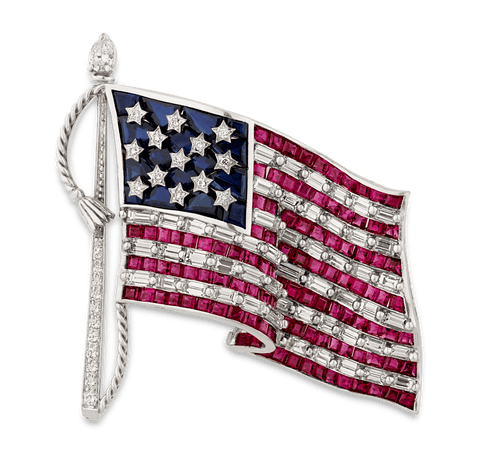
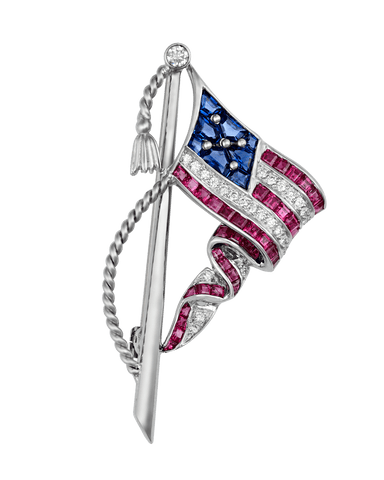
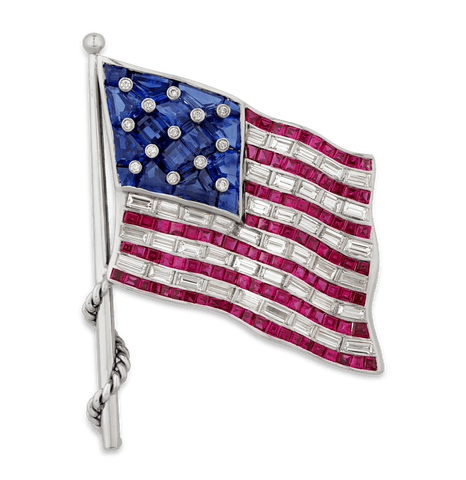
Among the most successful early creations was an American flag brooch designed for Black, Starr & Frost, a motif that remains closely associated with the firm today.
The Art Deco Era
The 1920s and 1930s marked a period of rapid expansion and innovation for Oscar Heyman & Brothers.
After relocating several times within Manhattan, the company established itself near Fifth Avenue, placing it at the center of New York’s luxury jewelry trade.
During the height of the Art Deco era, Oscar Heyman produced some of the most remarkable jewels of the period.
The Marjorie Merriweather Post Emerald Brooch
One of the firm’s most celebrated commissions was a spectacular carved emerald and diamond brooch created for Marcus & Co. and owned by Marjorie Merriweather Post.
The jewel featured an extraordinary 60-carat carved emerald and is now part of the collection of the Museum of Fine Arts, Boston.
During this era, Nathan Heyman also negotiated direct access to Colombian emerald sources, enabling the company to secure gemstones of exceptional quality.
Oscar Heyman further distinguished itself through technical innovation, securing patents for strengthened platinum bracelet clasps and early forms of invisible gemstone setting.
Unlike many jewelry houses of the period, Oscar Heyman did not initially operate retail storefronts. Instead, the company manufactured bespoke jewels for elite firms including Cartier, Black, Starr & Frost, Marcus & Co. and others.
The 1939 World’s Fair
The extraordinary extent of the company’s influence became publicly evident at the 1939 New York World’s Fair.
In the fair’s celebrated “House of Jewels” exhibition, Oscar Heyman produced the jewelry displayed by every participating jeweler except Tiffany & Co.
This remarkable achievement solidified the company’s enduring reputation as “The Jewelers’ Jeweler.”
World War II and Mid-Century Glamour
During World War II, Oscar Heyman shifted much of its production to support the American war effort.
Because platinum was reserved for military use and gemstones became increasingly difficult to source, the company devoted substantial factory resources to manufacturing jewel bearings for watches, compasses and aircraft instruments.
Even amid wartime restrictions, Oscar Heyman continued producing elegant patriotic jewelry while beginning a long-standing partnership with Neiman Marcus.
Following the war, George Heyman traveled internationally in search of exceptional gemstones, helping establish the firm’s legendary reputation for colored stones.
The Ballerina Ring
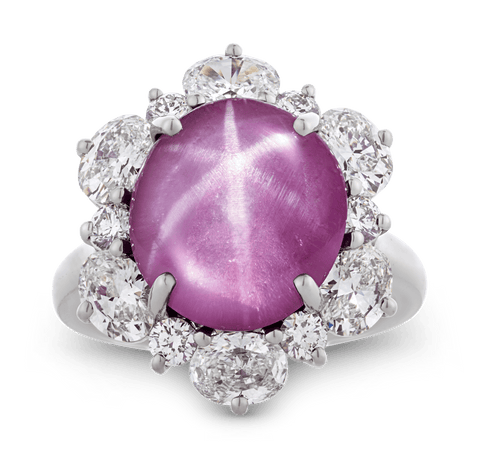
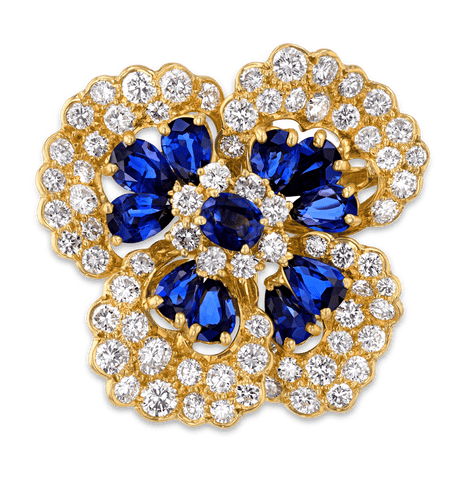
During the 1950s, floral brooches and the now-iconic “ballerina ring” became signature Oscar Heyman creations.
The original ballerina ring featured an untreated 11.20-carat star sapphire surrounded by tapered baguette diamonds and now resides in the Museum of Fine Arts, Boston.
Hollywood and Elizabeth Taylor
In 1959, Oscar Heyman entered Hollywood through a collaboration providing jewelry for the Lana Turner film Imitation of Life.
The firm’s cinematic creations opened the door to numerous celebrity commissions in the decades that followed.
Among the company’s most famous projects came in 1969, when Elizabeth Taylor and Richard Burton entrusted Oscar Heyman with creating the setting for the legendary Taylor-Burton Diamond.
The internally flawless 69.42-carat diamond required a custom pendant mounting completed under an extraordinarily tight deadline.
|
“Working day and night, the jeweler found 62 perfectly matched diamonds and finished the necklace. On the seventh day, we rested.” Adam Heyman |
Elizabeth Taylor famously debuted the completed jewel at Princess Grace of Monaco’s Scorpion Ball.
Later Years and Continuing Legacy
Oscar Heyman passed away in 1970, after which George Heyman assumed leadership of the company.
Throughout the following decades, the firm continued receiving prestigious commissions and expanding internationally, including opening offices in Japan during the 1980s.
Despite this growth, Oscar Heyman remained committed to its founding principles: every piece continued to be handcrafted in-house using exceptional gemstones and meticulous fabrication techniques.
In 2012, coinciding with the company’s centennial anniversary, Oscar Heyman & Brothers officially simplified its name to Oscar Heyman.
Today, the firm remains family-owned under the leadership of Adam Heyman and continues producing extraordinary jewels admired by collectors, museums and celebrities alike.
Collectors seeking exceptional examples of signed estate jewelry and important gemstone creations are invited to explore M.S. Rau’s curated collection of museum-quality jewels from the world’s most celebrated makers.
Quick Facts
|
Continue Your ExplorationDiscover exceptional creations by Oscar Heyman and other legendary jewelry houses through M.S. Rau’s curated collection of museum-quality estate jewelry, featuring extraordinary gemstones and masterfully crafted signed pieces. |
Heyman, Oscar
Introduction
For more than a century, Oscar Heyman has stood among the most respected names in American fine jewelry. Revered within the industry as “The Jewelers’ Jeweler,” the firm earned this distinction through its extraordinary craftsmanship, technical innovation and access to some of the world’s rarest and most exceptional gemstones.
Known for working with vivid Paraíba tourmalines, moonstones, colored sapphires, cat’s-eye chrysoberyls and important diamonds, Oscar Heyman developed a reputation for uncompromising quality and meticulous hand fabrication.
Today, the firm remains celebrated for creating some of the finest jewelry of the 20th and 21st centuries, combining exceptional gemstones with impeccable American craftsmanship.
The Formative Years
Oscar Heyman was born in Latvia in 1888. After briefly working in his uncle’s jewelry factory in Ukraine, he immigrated to New York in 1906 with his brother Nathan. Their brother Harry joined them shortly thereafter in 1907.
Oscar quickly found work in the jewelry trade and notably became the first non-French jeweler employed by Cartier.
Meanwhile, Nathan worked as a machinist for Western Electric. Both brothers became highly skilled in working with platinum, then still a relatively new and technically demanding material in jewelry production.
Their combined expertise in engineering, gem-setting and design laid the foundation for one of the most influential jewelry houses in American history.
In 1912, the brothers founded Oscar Heyman & Brothers in New York City. Nearly all of their other siblings eventually joined the business, making the company a truly family-run enterprise.
Patriotic Jewelry and Early Innovation
The years surrounding World War I proved transformative for the firm. Oscar received the first of six patents during this period, while the company’s patriotic jewelry designs became extraordinarily popular.
Among the most successful early creations was an American flag brooch designed for Black, Starr & Frost, a motif that remains closely associated with the firm today.
The Art Deco Era
The 1920s and 1930s marked a period of rapid expansion and innovation for Oscar Heyman & Brothers.
After relocating several times within Manhattan, the company established itself near Fifth Avenue, placing it at the center of New York’s luxury jewelry trade.
During the height of the Art Deco era, Oscar Heyman produced some of the most remarkable jewels of the period.
The Marjorie Merriweather Post Emerald Brooch
One of the firm’s most celebrated commissions was a spectacular carved emerald and diamond brooch created for Marcus & Co. and owned by Marjorie Merriweather Post.
The jewel featured an extraordinary 60-carat carved emerald and is now part of the collection of the Museum of Fine Arts, Boston.
During this era, Nathan Heyman also negotiated direct access to Colombian emerald sources, enabling the company to secure gemstones of exceptional quality.
Oscar Heyman further distinguished itself through technical innovation, securing patents for strengthened platinum bracelet clasps and early forms of invisible gemstone setting.
Unlike many jewelry houses of the period, Oscar Heyman did not initially operate retail storefronts. Instead, the company manufactured bespoke jewels for elite firms including Cartier, Black, Starr & Frost, Marcus & Co. and others.
The 1939 World’s Fair
The extraordinary extent of the company’s influence became publicly evident at the 1939 New York World’s Fair.
In the fair’s celebrated “House of Jewels” exhibition, Oscar Heyman produced the jewelry displayed by every participating jeweler except Tiffany & Co.
This remarkable achievement solidified the company’s enduring reputation as “The Jewelers’ Jeweler.”
World War II and Mid-Century Glamour
During World War II, Oscar Heyman shifted much of its production to support the American war effort.
Because platinum was reserved for military use and gemstones became increasingly difficult to source, the company devoted substantial factory resources to manufacturing jewel bearings for watches, compasses and aircraft instruments.
Even amid wartime restrictions, Oscar Heyman continued producing elegant patriotic jewelry while beginning a long-standing partnership with Neiman Marcus.
Following the war, George Heyman traveled internationally in search of exceptional gemstones, helping establish the firm’s legendary reputation for colored stones.
The Ballerina Ring
During the 1950s, floral brooches and the now-iconic “ballerina ring” became signature Oscar Heyman creations.
The original ballerina ring featured an untreated 11.20-carat star sapphire surrounded by tapered baguette diamonds and now resides in the Museum of Fine Arts, Boston.
Hollywood and Elizabeth Taylor
In 1959, Oscar Heyman entered Hollywood through a collaboration providing jewelry for the Lana Turner film Imitation of Life.
The firm’s cinematic creations opened the door to numerous celebrity commissions in the decades that followed.
Among the company’s most famous projects came in 1969, when Elizabeth Taylor and Richard Burton entrusted Oscar Heyman with creating the setting for the legendary Taylor-Burton Diamond.
The internally flawless 69.42-carat diamond required a custom pendant mounting completed under an extraordinarily tight deadline.
|
“Working day and night, the jeweler found 62 perfectly matched diamonds and finished the necklace. On the seventh day, we rested.” Adam Heyman |
Elizabeth Taylor famously debuted the completed jewel at Princess Grace of Monaco’s Scorpion Ball.
Later Years and Continuing Legacy
Oscar Heyman passed away in 1970, after which George Heyman assumed leadership of the company.
Throughout the following decades, the firm continued receiving prestigious commissions and expanding internationally, including opening offices in Japan during the 1980s.
Despite this growth, Oscar Heyman remained committed to its founding principles: every piece continued to be handcrafted in-house using exceptional gemstones and meticulous fabrication techniques.
In 2012, coinciding with the company’s centennial anniversary, Oscar Heyman & Brothers officially simplified its name to Oscar Heyman.
Today, the firm remains family-owned under the leadership of Adam Heyman and continues producing extraordinary jewels admired by collectors, museums and celebrities alike.
Collectors seeking exceptional examples of signed estate jewelry and important gemstone creations are invited to explore M.S. Rau’s curated collection of museum-quality jewels from the world’s most celebrated makers.
Quick Facts
|
Continue Your ExplorationDiscover exceptional creations by Oscar Heyman and other legendary jewelry houses through M.S. Rau’s curated collection of museum-quality estate jewelry, featuring extraordinary gemstones and masterfully crafted signed pieces. |


