
Philippe, Patek
Patek Philippe is among the most prestigious names in the history of horology. Founded in Geneva in the 19th century, the legendary Swiss watchmaker has become synonymous with technical innovation, refined craftsmanship and timeless elegance. Revered by collectors and royalty alike, Patek Philippe has produced some of the most complicated and valuable mechanical timepieces ever created.
Today, the firm remains the last major family-owned independent watch manufacturer in Geneva and continues to uphold a tradition of uncompromising quality through its meticulous hand-finishing and groundbreaking mechanical innovations.
|
“You never actually own a Patek Philippe. You merely look after it for the next generation.” Patek Philippe advertising campaign |
History
Patek Philippe was established in 1851 through the partnership of Polish watchmaker Antoni Patek and French horologist Adrien Philippe. The company quickly earned international acclaim for producing exceptionally precise and technically sophisticated timepieces.
Adrien Philippe revolutionized watchmaking through his invention of the keyless winding and hand-setting system, which eliminated the need for separate winding keys. His groundbreaking mechanism earned a bronze medal at the 1844 Industrial Exposition in Paris and was patented the following year.
The company’s reputation expanded dramatically after Queen Victoria purchased a Patek Philippe keyless watch during the Great Exhibition in London in 1851. Royal patronage helped cement the manufacturer’s status among Europe’s elite collectors.
Throughout the late 19th and early 20th centuries, Patek Philippe continued introducing major horological innovations. The company secured patents involving precision regulators, perpetual calendars and chronograph mechanisms.
In 1923, Patek Philippe produced the world’s first split-seconds chronograph wristwatch, followed in 1925 by the first wristwatch featuring a perpetual calendar.
 |
| Antoni Patek (left) and Adrien Philippe (right). |
The Stern Family
In 1932, brothers Jean and Charles Henri Stern acquired a controlling interest in Patek Philippe, ensuring the company would remain family-owned — a distinction it still maintains today.
Under the Stern family’s leadership, the company achieved extraordinary technical and commercial success. Patek Philippe earned top honors in the Geneva Observatory precision competitions and continued developing increasingly sophisticated complications.
In 1956, the manufacturer introduced its first all-electronic clock, followed by patents for innovative time-zone mechanisms in 1959.
Patek Philippe further cemented its reputation for technical mastery in 1962 when one of its tourbillon movements established a world precision record at the Geneva Observatory — a remarkable achievement in mechanical watchmaking.
The company’s commitment to preserving horological heritage led to the opening of the Patek Philippe Museum in Geneva in 2001, which today houses one of the world’s most important collections of historic timepieces and automata.
Legacy
Celebrating its 175th anniversary in 2014, Patek Philippe unveiled a commemorative collection of highly complicated watches that reflected the company’s enduring commitment to innovation and craftsmanship.
Today, Thierry Stern serves as president of the esteemed firm, continuing the family’s longstanding stewardship of the brand.
Patek Philippe is widely regarded as one of the most prestigious watchmakers in the world. Over the centuries, its clientele has included Queen Victoria, King Victor Emmanuel III of Italy, King Christian IX of Denmark, Pope Pius IX and Albert Einstein.
Collectors and museums alike continue to prize Patek Philippe timepieces for their mechanical ingenuity, rarity and exceptional artistry. Vintage and contemporary models routinely achieve record-breaking prices at major international auctions.
 |
| World Time Clock By Patek Philippe. Circa 2000. M.S. Rau, New Orleans. |
Quick Facts
|
Continue Your ExplorationDiscover exceptional Patek Philippe clocks, watches and other museum-quality luxury timepieces through M.S. Rau’s curated collection of fine watches and important decorative arts. |
Philippe, Patek
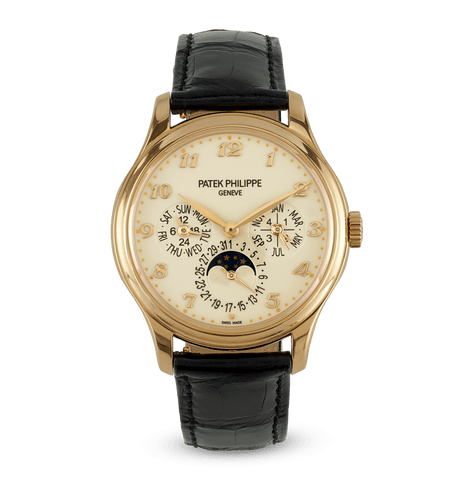


Patek Philippe is among the most prestigious names in the history of horology. Founded in Geneva in the 19th century, the legendary Swiss watchmaker has become synonymous with technical innovation, refined craftsmanship and timeless elegance. Revered by collectors and royalty alike, Patek Philippe has produced some of the most complicated and valuable mechanical timepieces ever created.
Today, the firm remains the last major family-owned independent watch manufacturer in Geneva and continues to uphold a tradition of uncompromising quality through its meticulous hand-finishing and groundbreaking mechanical innovations.
|
“You never actually own a Patek Philippe. You merely look after it for the next generation.” Patek Philippe advertising campaign |
History
Patek Philippe was established in 1851 through the partnership of Polish watchmaker Antoni Patek and French horologist Adrien Philippe. The company quickly earned international acclaim for producing exceptionally precise and technically sophisticated timepieces.
Adrien Philippe revolutionized watchmaking through his invention of the keyless winding and hand-setting system, which eliminated the need for separate winding keys. His groundbreaking mechanism earned a bronze medal at the 1844 Industrial Exposition in Paris and was patented the following year.
The company’s reputation expanded dramatically after Queen Victoria purchased a Patek Philippe keyless watch during the Great Exhibition in London in 1851. Royal patronage helped cement the manufacturer’s status among Europe’s elite collectors.
Throughout the late 19th and early 20th centuries, Patek Philippe continued introducing major horological innovations. The company secured patents involving precision regulators, perpetual calendars and chronograph mechanisms.
In 1923, Patek Philippe produced the world’s first split-seconds chronograph wristwatch, followed in 1925 by the first wristwatch featuring a perpetual calendar.
|
| Antoni Patek (left) and Adrien Philippe (right). |
The Stern Family
In 1932, brothers Jean and Charles Henri Stern acquired a controlling interest in Patek Philippe, ensuring the company would remain family-owned — a distinction it still maintains today.
Under the Stern family’s leadership, the company achieved extraordinary technical and commercial success. Patek Philippe earned top honors in the Geneva Observatory precision competitions and continued developing increasingly sophisticated complications.
In 1956, the manufacturer introduced its first all-electronic clock, followed by patents for innovative time-zone mechanisms in 1959.
Patek Philippe further cemented its reputation for technical mastery in 1962 when one of its tourbillon movements established a world precision record at the Geneva Observatory — a remarkable achievement in mechanical watchmaking.
The company’s commitment to preserving horological heritage led to the opening of the Patek Philippe Museum in Geneva in 2001, which today houses one of the world’s most important collections of historic timepieces and automata.
Legacy
Celebrating its 175th anniversary in 2014, Patek Philippe unveiled a commemorative collection of highly complicated watches that reflected the company’s enduring commitment to innovation and craftsmanship.
Today, Thierry Stern serves as president of the esteemed firm, continuing the family’s longstanding stewardship of the brand.
Patek Philippe is widely regarded as one of the most prestigious watchmakers in the world. Over the centuries, its clientele has included Queen Victoria, King Victor Emmanuel III of Italy, King Christian IX of Denmark, Pope Pius IX and Albert Einstein.
Collectors and museums alike continue to prize Patek Philippe timepieces for their mechanical ingenuity, rarity and exceptional artistry. Vintage and contemporary models routinely achieve record-breaking prices at major international auctions.
|
| World Time Clock By Patek Philippe. Circa 2000. M.S. Rau, New Orleans. |
Quick Facts
|
Continue Your ExplorationDiscover exceptional Patek Philippe clocks, watches and other museum-quality luxury timepieces through M.S. Rau’s curated collection of fine watches and important decorative arts. |


