
Revere, Paul
(December 21, 1734 – May 10, 1818)
Paul Revere is remembered today as one of the great patriotic figures of the American Revolution, immortalized for his famous midnight ride warning colonial militias of approaching British troops. Yet beyond his revolutionary legacy, Revere was also among the most accomplished silversmiths in early American history.
Highly regarded during his lifetime for his exceptional craftsmanship, Revere produced some of the finest silver objects created in colonial America. His works combined English silversmithing traditions with emerging American identity and artistry, resulting in pieces that remain among the most important achievements in American decorative arts.
Today, surviving silver and gold works by Paul Revere are treasured by major museums and collectors worldwide for both their artistic beauty and extraordinary historical significance.
|
“Listen, my children, and you shall hear of the midnight ride of Paul Revere.” Henry Wadsworth Longfellow, Paul Revere’s Ride (1861) |
Early Career
Paul Revere Jr. was born in Boston in 1734 to Apollos Rivoire — later anglicized to Paul Revere Sr. — a French Huguenot immigrant who arrived in colonial Boston in 1715.
His father apprenticed under the celebrated Boston goldsmith John Coney, where he mastered the demanding techniques of goldsmithing and engraving before establishing his own successful workshop.
Following family tradition, young Paul Revere Jr. apprenticed under his father from an early age, demonstrating remarkable discipline and technical ability.
When Revere was just nineteen years old, his father died unexpectedly in 1754, leaving him responsible for both the family business and household.
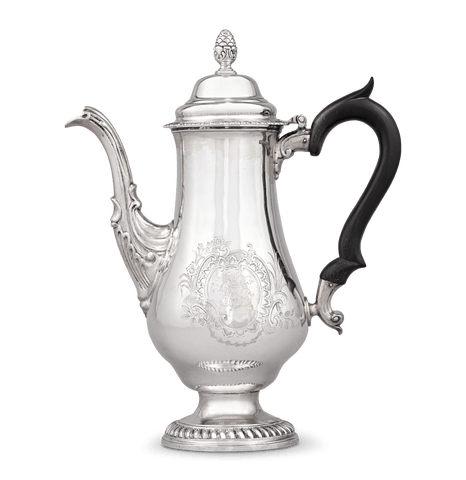
Despite his youth, Revere quickly established himself as one of Boston’s leading silversmiths. By the 1760s, his workshop was producing a wide range of luxury objects including tea services, tankards, salvers, communion vessels and finely engraved silverware for both churches and wealthy colonial patrons.
Revere possessed the rare ability to complete every stage of production himself, from refining raw silver ingots to engraving the final decorative surfaces.
His exceptional engraving skills also led to important commissions beyond silverwork, including the engraving of plates used to print some of Massachusetts’ earliest paper currency.
A Revolutionary Shift
The growing political and economic tensions between Great Britain and the American colonies deeply affected Revere’s business and personal life.
Following the French and Indian War, England imposed heavy taxes on the colonies through measures such as the Townshend Acts, dramatically increasing the cost of imported goods and luxury items.
As silver prices rose sharply, elaborate sterling tea services became prohibitively expensive for many colonists.
At the same time, Revere became increasingly active within Boston’s revolutionary circles. His political engagement stemmed not only from patriotism but also from his understanding of how British economic policies threatened colonial tradesmen and artisans.
Revere emerged as an important intermediary between Boston’s working classes and influential revolutionary leaders including Samuel Adams and John Hancock.
His extraordinary engraving abilities proved especially valuable to the Patriot cause. Revere created political prints and engravings that communicated anti-British sentiment quickly and effectively, even among colonists unable to read lengthy pamphlets or political essays.
These visual works helped shape public opinion during the turbulent years leading to the American Revolution.
Historic Creations
Among Revere’s most famous surviving works is the celebrated Sons of Liberty Bowl, created in 1768.
Widely regarded as one of the greatest masterpieces of colonial American silver, the bowl commemorated the ninety-two members of the Massachusetts House of Representatives who refused to rescind the Massachusetts Circular Letter protesting British taxation policies.
The bowl honors what became known as the “Glorious Ninety-Two” and incorporates references to the Magna Carta and the English Bill of Rights, symbolizing colonial resistance against perceived British tyranny.
Today, the Sons of Liberty Bowl is housed at the Museum of Fine Arts, Boston.
Revere’s silverwork from this era reflects both extraordinary technical refinement and increasing political symbolism, transforming decorative objects into expressions of emerging American identity.
Post-Revolution Career
Following the American Revolution, Revere resumed his career as one of the nation’s premier silversmiths.
His postwar workshop expanded significantly, producing elegant teapots, creamers, pitchers, sauceboats and serving vessels for the growing American elite.
Art historians often distinguish Revere’s silver into two major stylistic phases.
His pre-Revolutionary works largely reflect the influence of the Rococo style, characterized by flowing curves, ornate handles and elaborate chased decoration.
By contrast, his later works increasingly embraced Neoclassicism, the dominant aesthetic movement in post-Revolutionary America. These pieces featured cleaner lines, balanced proportions and restrained ornament inspired by classical antiquity.
Technical innovation also played an important role in Revere’s later success. The introduction of flatting mills and improved production techniques allowed his workshop to produce silver objects more efficiently and at greater scale.
Historical records indicate that Revere’s shop produced approximately 1,145 silver objects before the Revolution and more than 4,200 afterward.
Legacy
Paul Revere’s legacy extends far beyond his legendary midnight ride.
As a master silversmith, engraver and entrepreneur, he helped define the artistic and cultural identity of early America.
His silver objects combined European craftsmanship with uniquely American themes and symbolism, helping establish an independent artistic tradition in the newly formed United States.
Today, Revere’s surviving works remain among the most prized examples of American silver in existence.
Major institutions including the Museum of Fine Arts, Boston, the Metropolitan Museum of Art, the Worcester Art Museum and the Smithsonian National Museum of American History preserve and exhibit his remarkable creations.
Collectors seeking exceptional examples of early American silver and historic decorative arts are invited to explore M.S. Rau’s curated collection of museum-quality antiques and fine silver.
Quick Facts
|
Continue Your ExplorationDiscover exceptional examples of early American silver, historic decorative arts and museum-quality antiques through M.S. Rau’s curated collection of important craftsmanship and design. |
Revere, Paul
(December 21, 1734 – May 10, 1818)
Paul Revere is remembered today as one of the great patriotic figures of the American Revolution, immortalized for his famous midnight ride warning colonial militias of approaching British troops. Yet beyond his revolutionary legacy, Revere was also among the most accomplished silversmiths in early American history.
Highly regarded during his lifetime for his exceptional craftsmanship, Revere produced some of the finest silver objects created in colonial America. His works combined English silversmithing traditions with emerging American identity and artistry, resulting in pieces that remain among the most important achievements in American decorative arts.
Today, surviving silver and gold works by Paul Revere are treasured by major museums and collectors worldwide for both their artistic beauty and extraordinary historical significance.
|
“Listen, my children, and you shall hear of the midnight ride of Paul Revere.” Henry Wadsworth Longfellow, Paul Revere’s Ride (1861) |
Early Career
Paul Revere Jr. was born in Boston in 1734 to Apollos Rivoire — later anglicized to Paul Revere Sr. — a French Huguenot immigrant who arrived in colonial Boston in 1715.
His father apprenticed under the celebrated Boston goldsmith John Coney, where he mastered the demanding techniques of goldsmithing and engraving before establishing his own successful workshop.
Following family tradition, young Paul Revere Jr. apprenticed under his father from an early age, demonstrating remarkable discipline and technical ability.
When Revere was just nineteen years old, his father died unexpectedly in 1754, leaving him responsible for both the family business and household.
Despite his youth, Revere quickly established himself as one of Boston’s leading silversmiths. By the 1760s, his workshop was producing a wide range of luxury objects including tea services, tankards, salvers, communion vessels and finely engraved silverware for both churches and wealthy colonial patrons.
Revere possessed the rare ability to complete every stage of production himself, from refining raw silver ingots to engraving the final decorative surfaces.
His exceptional engraving skills also led to important commissions beyond silverwork, including the engraving of plates used to print some of Massachusetts’ earliest paper currency.
A Revolutionary Shift
The growing political and economic tensions between Great Britain and the American colonies deeply affected Revere’s business and personal life.
Following the French and Indian War, England imposed heavy taxes on the colonies through measures such as the Townshend Acts, dramatically increasing the cost of imported goods and luxury items.
As silver prices rose sharply, elaborate sterling tea services became prohibitively expensive for many colonists.
At the same time, Revere became increasingly active within Boston’s revolutionary circles. His political engagement stemmed not only from patriotism but also from his understanding of how British economic policies threatened colonial tradesmen and artisans.
Revere emerged as an important intermediary between Boston’s working classes and influential revolutionary leaders including Samuel Adams and John Hancock.
His extraordinary engraving abilities proved especially valuable to the Patriot cause. Revere created political prints and engravings that communicated anti-British sentiment quickly and effectively, even among colonists unable to read lengthy pamphlets or political essays.
These visual works helped shape public opinion during the turbulent years leading to the American Revolution.
Historic Creations
Among Revere’s most famous surviving works is the celebrated Sons of Liberty Bowl, created in 1768.
Widely regarded as one of the greatest masterpieces of colonial American silver, the bowl commemorated the ninety-two members of the Massachusetts House of Representatives who refused to rescind the Massachusetts Circular Letter protesting British taxation policies.
The bowl honors what became known as the “Glorious Ninety-Two” and incorporates references to the Magna Carta and the English Bill of Rights, symbolizing colonial resistance against perceived British tyranny.
Today, the Sons of Liberty Bowl is housed at the Museum of Fine Arts, Boston.
Revere’s silverwork from this era reflects both extraordinary technical refinement and increasing political symbolism, transforming decorative objects into expressions of emerging American identity.
Post-Revolution Career
Following the American Revolution, Revere resumed his career as one of the nation’s premier silversmiths.
His postwar workshop expanded significantly, producing elegant teapots, creamers, pitchers, sauceboats and serving vessels for the growing American elite.
Art historians often distinguish Revere’s silver into two major stylistic phases.
His pre-Revolutionary works largely reflect the influence of the Rococo style, characterized by flowing curves, ornate handles and elaborate chased decoration.
By contrast, his later works increasingly embraced Neoclassicism, the dominant aesthetic movement in post-Revolutionary America. These pieces featured cleaner lines, balanced proportions and restrained ornament inspired by classical antiquity.
Technical innovation also played an important role in Revere’s later success. The introduction of flatting mills and improved production techniques allowed his workshop to produce silver objects more efficiently and at greater scale.
Historical records indicate that Revere’s shop produced approximately 1,145 silver objects before the Revolution and more than 4,200 afterward.
Legacy
Paul Revere’s legacy extends far beyond his legendary midnight ride.
As a master silversmith, engraver and entrepreneur, he helped define the artistic and cultural identity of early America.
His silver objects combined European craftsmanship with uniquely American themes and symbolism, helping establish an independent artistic tradition in the newly formed United States.
Today, Revere’s surviving works remain among the most prized examples of American silver in existence.
Major institutions including the Museum of Fine Arts, Boston, the Metropolitan Museum of Art, the Worcester Art Museum and the Smithsonian National Museum of American History preserve and exhibit his remarkable creations.
Collectors seeking exceptional examples of early American silver and historic decorative arts are invited to explore M.S. Rau’s curated collection of museum-quality antiques and fine silver.
Quick Facts
|
Continue Your ExplorationDiscover exceptional examples of early American silver, historic decorative arts and museum-quality antiques through M.S. Rau’s curated collection of important craftsmanship and design. |


