Introducing the Chinese Year of the Horse
Quick Glance:
- The Year of the Fire Horse, occurring once every 60 years, symbolizes energy, movement and decisive action.
- The horse has been a powerful artistic motif across cultures, representing strength, authority and prestige from antiquity to the modern era.
- In Chinese and Western traditions alike, horses appear prominently in fine art, decorative objects and jewelry.
- Modern artists reimagined the horse through abstraction and expressive form, underscoring the motif’s lasting relevance.

La ronde des cavaliers by André Brasilier. Oil on canvas. M.S. Rau.
Tuesday, February 17, marks the Lunar New Year and the arrival of the Year of the Fire Horse, a cycle that comes only once every 60 years. In Eastern tradition, among the other zodiac animals, the horse signifies action, urging decisive movement. The Fire Horse, in particular, encourages purposeful action and the courage to break from the past.

Sculpture of the Horse from the Chinese zodiac in the park at Mount Mogan, Zhejiang Province, China. Source.
With this electric energy, it is no surprise that horses have galloped through human history. These practical companions in daily life bound across art and literature, carrying heroes into battle and safely home again. From ancient cave paintings to modern sculpture, the horse universally connects with strength, movement and prestige. As we welcome the Year of the Fire Horse, we’re going to explore some of our favorite depictions of the animal in fine art, decorative objects and, of course, jewelry.
The Horse in the Chinese Zodiac
The Chinese zodiac comprises twelve animal signs, each representing a year within a 12-year cycle. These signs combine with the five elements—Wood, Fire, Earth, Metal and Water—to form the 60-year cycle, with each element usually governing two consecutive years. For example, while the last Year of the Horse was just 12 years ago, the last Year of the Fire Horse was 1966!
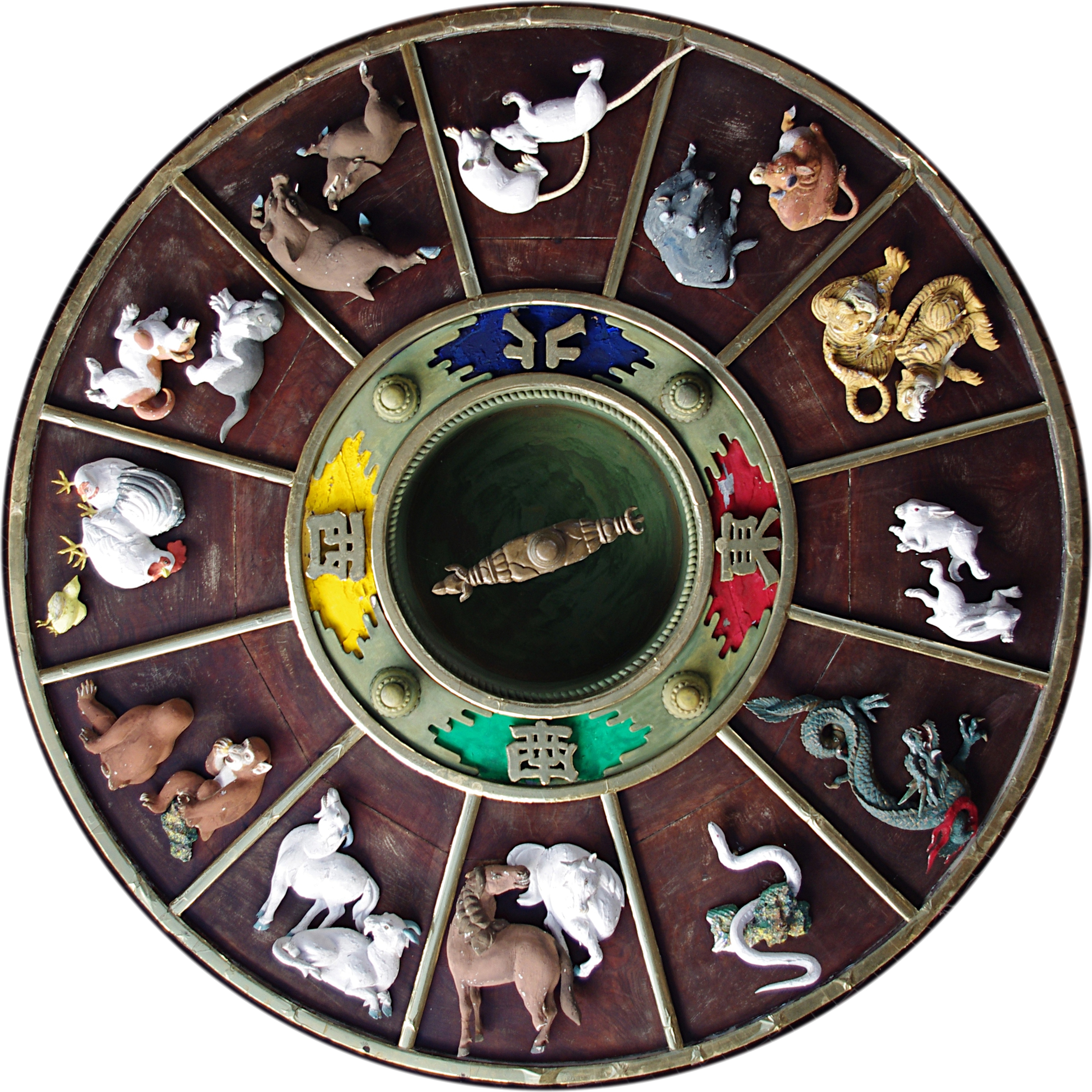
Each sign is believed to confer distinct traits on people born in its year, influencing personality, relationships and fortune. The system dates back at least to the Han dynasty (201 BCE–220 CE) and is rooted in folklore, including the tale of a race that determined the animals’ order. These signs—Rat, Ox, Tiger, Hare, Dragon, Snake, Horse, Goat, Monkey, Rooster, Dog and Pig—appear widely in East Asian art and are used for guiding long-term decisions.

Carving with the Zodiac on the ceiling of the gate to Kushida Shrine in Fukuoka. Source.
The Horse occupies the seventh position in the zodiac and is traditionally associated with speed, endurance and power. The animal represents a leap toward success and triumph over obstacles. Individuals born under this sign are characterized by curiosity and a zest for life. They are often cheerful, generous and socially engaging, capable of inspiring harmony and connection. People born into the year of the horse are also thought to be independent and resilient, with vitality and determination that often enable early career advancement and sustained achievement.
Symbolism of the Horse Across Cultures & Art
The horse can be found in art since prehistory, since at least the 35th millennium BCE. Some scholars propose that these depictions, such as those in the caves of Lascaux (France) and Altamira (Spain) around 17,000 years ago, served both spiritual and practical purposes, including ensuring success in the hunt.

Circa 15,000-13,000 BCE. Lascaux Cave, Montignac, France. Source.
In the Chinese Song dynasty (960-1279 CE), horses were central to the vast empire’s expansion and administration. The development of post houses in antiquity, driven by the need for efficient communication across an empire, highlights the horse’s role in sustaining a vast territory and enabling rapid military logistics, a system later adopted by the Mongols. Beyond utility, the horse also stands for progress in Chinese culture, as can be seen in the predictions of the zodiac.
Horses also carry similar importance in the West, and with this importance comes art and iconography. In ancient Egypt and Mesopotamia, horses appeared in carvings and murals linked to royalty and the elite. Classical Greece celebrated the horse in monumental works such as the Parthenon frieze, emblematic of civic glory. During the Middle Ages, horses featured prominently in the context of knighthood and chivalry. Each of these examples reflects the strength and pride associated with the noble steed.
Horses in Fine Art
In Chinese art, the horse’s presence was particularly prominent during the Tang dynasty, seen in masterpieces such as the Six Steeds of Zhao Mausoleum. Horses were often depicted in a natural state of movement, reflecting admiration for the animal itself and its elegance in motion.

Qingzhui Steed of the Six Steeds of Zhao Mausoleum at Beilin Museum, Xi'an, Northwest China. Circa 649 CE. Source.
In European art, the Renaissance master Albrecht Dürer elevated equestrian imagery through his woodcuts and engravings, combining naturalism with technical precision. Works such as The Small Horse demonstrate his extensive study and ultimate mastery of proportion and anatomy. Horses recur throughout his work, standing for strength and authority, concepts rooted in Renaissance humanism and classical ideals. Dürer’s intellectual approach to composition helped define Northern Renaissance printmaking and secured his lasting influence on the visual canon.

The Small Horse by Albrecht Dürer. Plate dated 1505. Copperplate engraving on laid paper. M.S. Rau.
Historically, important figures have been depicted on horseback to convey military prowess and social status. In such works, the horse functions as an allegory for control over nature and armies, amplifying the subject’s heroic presence. One might first think of Napoleon, who chose to depict himself as a reborn Roman emperor, famously charging on horseback across the Alps. Art historians describe traditional gestures such as an outstretched arm as a signal of pacification, emphasizing the ruler’s ability to subjugate enemies and maintain stability.

Marcus Aurelius Equestrian Bronze. Circa 1780. M.S. Rau.
Over time, the artistic canon has evolved, embracing innovation and abstraction while reexamining traditional iconography. Horses proved especially compelling within this shift. Their muscular movement and kinetic energy present a natural challenge to capture in a single frame, encouraging experimentation with form in motion. Artists such as Raoul Dufy and André Brasilier embraced the horse as a vehicle for modern expression, reducing the figure to sweeping lines or lyrical silhouettes. At the same time, the horse’s long and deeply embedded history in art makes it an ideal visual symbol, instantly recognizable, yet endlessly adaptable.

Chevaux de courses by Raoul Dufy. Dated 1929. Watercolor and gouache on Arches paper. M.S. Rau.
Horses in Antiques and Decorative Arts
Horse imagery appears extensively in decorative arts such as figurines, sculptures and functional objects. Figurines range from Staffordshire pottery, Meissen porcelain and Spanish Lladró to cast bronze and brass, often depicting galloping or war horses. Decorative objects frequently incorporate equine motifs in horse-head bookends, mantel clocks with carriage scenes, doorstops and coin banks.

Horse and Snake Porcelain by Meissen. Circa 1880. Sold at M.S. Rau.
The tradition of using horses as decorative objects is far from new. In China, the cultural appreciation of horses dates back to the Shang dynasty (1600–1100 BCE), when real horses were buried alive with emperors alongside their chariots, for use in the afterlife. By 210 BCE, during the Qin dynasty, it was decided that a symbolic sacrifice would suffice, giving rise to Tang dynasty horse sculptures, which were produced across multiple workshops with distinctive regional styles. These Tang horses, crafted in varied clays, reveal subtle geographic markers through color, texture and form.

Tang Dynasty Striding Horse. Circa 7th-10th century CE. M.S. Rau.
Notable examples include the Chang’an Horses from the Tang capital, known for their strong, balanced proportions; Feng Xiang Mounts from western Shaanxi, typically prancing with finely sculpted heads, elegant contours and dynamic movement in red and grey pottery; and Luoyang in central China, which produced both sancai (three-color glazed) and unglazed horses, celebrated for their streamlined, lively forms that convey a sense of motion.
The Horse in Jewelry Design
Horses inspire jewelry across cultures, translating the animal’s symbolism of good fortune into wearable form. As we enter the Year of the Horse, equine motifs are again capturing attention, from haute couture to fine jewelry.

David Webb White Enamel, Pavé Diamond and Emerald Horse Brooch. M.S. Rau.
From ancient Greek tokens to Roman jewels, equestrian imagery has long served as a marker of status and power. In modern design, houses such as Hermès, Gucci and Versace continue this tradition, translating the horse into rings, pendants, bracelets and watches. Beyond figural representations, equestrian accessories such as horseshoes and bits have become enduring motifs in jewelry and accessories. These designs reflect both the elite associations of horsemanship and longstanding symbolism, including the Irish tradition of the horseshoe worn upward to preserve good fortune.

Polo Pony Diamond Brooch. M.S. Rau.
The horse’s enduring influence reflects both its essential role in human history and its powerful resonance, carrying us forward both literally and figuratively. As we charge into the Year of the Fire Horse, this spirit of momentum feels especially apt, as M.S. Rau looks ahead to broadening its horizons with a new gallery in Aspen, Colorado.
Explore M.S. Rau for your next horse-themed acquisition, and we wish you a prosperous and joyful New Year!
Works Cited
Benge, Elizabeth. "Horses in Ancient Art." The Art Institute of Chicago, December 17, 2024.
Blakemore, Erin. "What Is the Chinese Zodiac? How the Ancient Calendar Shaped Life for Centuries." National Geographic, January 23, 2026.
Glueck, Grace. "The Chinese Horse, A Symbol of Power." The New York Times, October 24, 1997.
Meier, Allison C. "Why Are Cities Filled with Metal Men on Horseback?" JSTOR Daily, September 16, 2019.
Sullivan, Will. "Chemistry Reveals the History of an Ancient Dancing Horse Sculpture." Smithsonian Magazine, September 22, 2022.