


M.S. Rau is committed to offering fine art of the highest caliber and we seek paintings and sculpture by historically renowned artists, often with impressive provenance. The large majority of our works of art come from private. . .
Buy with Confidence
At M.S. Rau, we are committed to building a long-term, rewarding relationship with each and every client. That’s why your purchase is backed by our 125% guarantee.
Learn MoreQuartre Visages Ceramic Pitcher by Pablo Picasso
- This beautiful ceramic pitcher was created by Pablo Picasso at the Madoura Pottery
- The painted and glazed white earthenware pitcher has a bold, graphic design of four faces
- It perfectly exemplifies Picasso’s seamless fusion of painting, sculpture and function
- It is listed in Alain Ramié's Catalogue Raisonné, as number 436
- Get complete item description here
$24,500
Item No.
32-1860
To speak to one of our experts, call 1-888-711-8084
Description
Pablo Picasso
1881-1973 | Spanish
Quatre visages (Four Faces)
Earthenware ceramic and paint
Created in 1959 at the Madoura Pottery in Vallauris, Quatre Visages (Four Faces) stands among the most inventive expressions of Pablo Picasso’s lifelong exploration of form, line and function. Executed in painted and glazed white earthenware, this sculptural pitcher unites painting, sculpture and utility in a single, dynamic work. With its fluid contours and rhythmic design, it embodies the. . .
1881-1973 | Spanish
Quatre visages (Four Faces)
Earthenware ceramic and paint
Created in 1959 at the Madoura Pottery in Vallauris, Quatre Visages (Four Faces) stands among the most inventive expressions of Pablo Picasso’s lifelong exploration of form, line and function. Executed in painted and glazed white earthenware, this sculptural pitcher unites painting, sculpture and utility in a single, dynamic work. With its fluid contours and rhythmic design, it embodies the. . .
Read More
Pablo Picasso
1881-1973 | Spanish
Quatre visages (Four Faces)
Earthenware ceramic and paint
Created in 1959 at the Madoura Pottery in Vallauris, Quatre Visages (Four Faces) stands among the most inventive expressions of Pablo Picasso’s lifelong exploration of form, line and function. Executed in painted and glazed white earthenware, this sculptural pitcher unites painting, sculpture and utility in a single, dynamic work. With its fluid contours and rhythmic design, it embodies the artist’s irrepressible creativity and mastery across mediums.
A stylized face emerges from sweeping black brushstrokes that define expressive eyes, a long vertical nose and an arched mouth. The handle and rim are accented with bold, striped patterns that animate the curving surface, while each rotation reveals a new visage or variation—true to its title. The work’s striking simplicity and economy of line capture Picasso’s fascination with reducing form to its most essential, expressive elements.
Picasso’s partnership with the Madoura Pottery beginning in 1946 marked a pivotal chapter in his career. Through the ceramic medium, he redefined the boundaries of modern art, merging the centuries-old tradition of Mediterranean pottery with the radical sensibility of Cubism. Today, his ceramics are represented in major collections worldwide, including the Musée Picasso in Paris, the Metropolitan Museum of Art in New York and the Museum Ludwig in Cologne.
Inscribed Edition Picasso, numbered No. 4/300, with the Madoura Plein Feu and Empreinte Originale de Picasso pottery stamps on the underside.
Circa 1959
9" high x 7" wide x 5" deep
Provenance:
Private collection
M.S. Rau, New Orleans
Literature:
Alain Ramié, Catalogue of the Edited Ceramic Works 1947–1971, no. 436
1881-1973 | Spanish
Quatre visages (Four Faces)
Earthenware ceramic and paint
Created in 1959 at the Madoura Pottery in Vallauris, Quatre Visages (Four Faces) stands among the most inventive expressions of Pablo Picasso’s lifelong exploration of form, line and function. Executed in painted and glazed white earthenware, this sculptural pitcher unites painting, sculpture and utility in a single, dynamic work. With its fluid contours and rhythmic design, it embodies the artist’s irrepressible creativity and mastery across mediums.
A stylized face emerges from sweeping black brushstrokes that define expressive eyes, a long vertical nose and an arched mouth. The handle and rim are accented with bold, striped patterns that animate the curving surface, while each rotation reveals a new visage or variation—true to its title. The work’s striking simplicity and economy of line capture Picasso’s fascination with reducing form to its most essential, expressive elements.
Picasso’s partnership with the Madoura Pottery beginning in 1946 marked a pivotal chapter in his career. Through the ceramic medium, he redefined the boundaries of modern art, merging the centuries-old tradition of Mediterranean pottery with the radical sensibility of Cubism. Today, his ceramics are represented in major collections worldwide, including the Musée Picasso in Paris, the Metropolitan Museum of Art in New York and the Museum Ludwig in Cologne.
Inscribed Edition Picasso, numbered No. 4/300, with the Madoura Plein Feu and Empreinte Originale de Picasso pottery stamps on the underside.
Circa 1959
9" high x 7" wide x 5" deep
Provenance:
Private collection
M.S. Rau, New Orleans
Literature:
Alain Ramié, Catalogue of the Edited Ceramic Works 1947–1971, no. 436
Read Less
Specifications


| Maker: | Picasso, Pablo |
| Period: | 1919-Present |
| Origin: | France |
| Type: | Other Fine Art |
| Style: | Modernism |
| Depth: | 5.0 in. (12.7 cm) |
| Width: | 7.0 in. (17.78 cm) |
| Height: | 9.0 in. (22.86 cm) |
Discover More

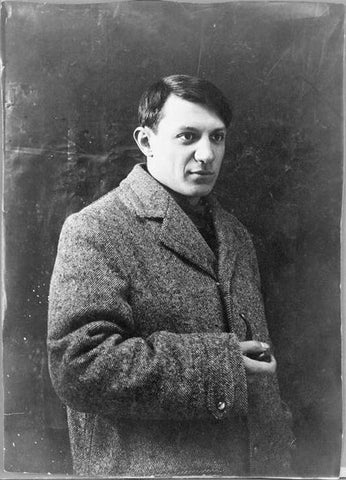

Picasso, Pablo
One could argue that Pablo Picasso was the most influential artist to have ever lived. He was certainly one of the most diverse, creating works of art in a dizzying array of styles and media...
Read More
10 Things You Didn't Know About Pablo Picasso
More than any other artist, Pablo Picasso defined Modern Art of the 20th century. During his lifetime, he was adored by the French public and the art establishment, reaching celebrity status in his later...
Read More
Buy with Confidence
At M.S. Rau, we are committed to building a long-term, rewarding relationship with each and every client. That’s why your purchase is backed by our 125% guarantee.
Learn More


