

Caillebotte, Gustave
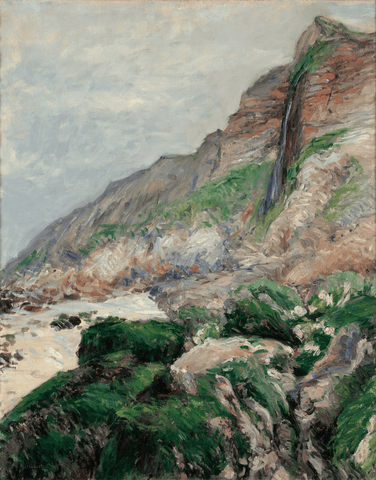
Gustave Caillebotte was most well-known during his life as a collector and patron of the arts, but he was also a prolific painter and contributor to the Impressionist movement. Due to his perpetual avoidance of fame during his career, his name largely faded into obscurity for many years following his death, and it was not until the mid-1970’s that his unique place in the Impressionist movement was recognized.
Painting for passion rather than profit, his personal oeuvre is relatively small; he produced only around 450 artworks in his short life. Although reports after his death claimed he had retired many years before, Caillebotte painted from at least 1870 until 1894, the year he died.
Early Life and Education |
Gustave Caillebotte was born on August 19, 1848, in Paris, France, as the second of three sons to wealthy parents. He was raised in a large house on Rue du Faubourg-Saint-Denis, an area where much of the Paris elite resided. In 1868, his family moved into a newly built townhouse on Rue de Miromesnil. Many of his earliest paintings reflect his genteel upbringing, showing scenes of his family set in wealthy domestic interiors.
Caillebotte’s older brother, René, died in 1876 at only 26, leaving only Gustave and Martial, who was also an artist, though dedicated to the piano. The two surviving brothers received a large inheritance after their father’s passing in 1874, giving them the financial stability to pursue their artistic interests. Gustave and Martial remained close throughout their lives, and Martial was the subject of a number of his brother’s paintings. An 1876 work shows Martial engrossed in playing the piano in a luxurious Parisian interior.

|
Jeune homme au piano (Young Man at the Piano). 1876. Oil on canvas. Private collection. |
Caillebotte earned a law degree from the Lycée Louis-le-Grand in 1870 in preparation to manage his father’s successful textile business. After his father paid for him to avoid a draft during law school, he was drafted again after graduation and served in the Franco-Prussian War in the 7th Battalion of the Garde Nationale Mobile de la Seine, assigned to the defense of Paris.
Very little information survives about Caillebotte’s early work, or when he started painting, but after being discharged from the war in 1871, he joined French painter Léon Bonnat’s studio and prepared for the entrance exam to the École des Beaux-Arts. He passed the exam in 1873 but only studied there for a year, due to creative differences between the school’s rigorous academic curriculum and his own innovative style. Despite his short-lived formal art education, some paintings during this time maintain elements of the academic style taught at the École. For example, Intérieur d'atelier au poêle, painted around 1872, utilizes an academic form study model as the central focal point, precise detail and composition and chiaroscuro—dramatic light and shadows—to show depth.

|
Intérieur d'atelier au poêle (Interior of a Workshop with a Stove). Circa 1872. Private collection, France. |
Place in the Impressionist Movement |
Caillebotte’s first public interaction with the Impressionist movement was as a collector, as he was one of the few to purchase works at the early Impressionist auction at Hôtel Drouot in 1875. He had been in communication with the Impressionists as early as 1874, when Edgar Degas wrote of wanting to include Caillebotte’s work in an exhibition. While this plan was never executed, Degas likely introduced Caillebotte to other artists in his circle, including Renoir, Bazille, Sisley and Monet, who remained close friends until Caillebotte’s death.
After his work was rejected from the Paris Salon in 1875, eight of Caillebotte’s paintings were included in the Impressionist Exhibition in April of 1876. From then on, he participated in every Impressionist Exhibition except in 1881 and 1886. Caillebotte also assumed an organizational role in these exhibitions, supporting them financially by using his wealthy Parisian network, as well as helping to hang paintings. He also represented absent friends, ensuring their works were exhibited and relaying to them the prices fetched and the reactions their pieces received.
In 1881, cohesion among the Impressionists began to falter, and Caillebotte had disagreements with Degas about the organization of the exhibit, leading to his exclusion from the event. After that year, Caillebotte's formal ties to the Impressionists gradually waned, yet his personal relationships endured. He wrote candidly of his ideological differences with some, while affirming his admiration for them as artists and his affection for them as friends.
Personal Style |
Like other Impressionists, Caillebotte rejected the traditional competitions and juried salons as well as the traditional studio. His paintings revolved around familiar and accessible subjects—his landscapes were places he visited, and his portraits were often of his friends or family. Caillebotte was also innovative within the Impressionist style as he incorporated more realism into his work than others, including meticulous detail into each scene.
In the early to mid-1870s, Caillebotte spent summers at his parents’ estate in Yerres, southeast of Paris. He worked with Monet during his time at Yerres and the two artists collaborated, bonding over their love of the landscape. This period shows the beginning of Caillebotte’s interest in natural subjects, particularly water. In his Yerres series, he produced many paintings of men in boats and calming riverside scenes. His mother died in 1879, prompting the sale of the family’s Yerres estate and the end of Caillebotte’s Yerres series.

|
L’Yerres, effet de pluie (The Yerres, Effect of The Rain). 1875. Oil on Canvas. Eskenazi Museum of Art at Indiana University, Bloomington, Indiana. |
Many of Caillebotte's early works centered Yerres or Parisian interiors, but around 1880, he began looking elsewhere for inspiration. He started a series of scenes of Normandy, typically of seascapes in the Villers and Trouville regions, painted during brief visits to friends while he participated in regattas with the Cercle de la Voile de Paris, a Parisian nautical club.
Life in Gennevilliers |
Around 1880, Caillebotte purchased a rural estate in Gennevilliers, just outside of Paris, as a replacement summer residence for the Yerres estate. Until 1887, he used it only as a summer home, spending the autumns and winters in Paris, but in 1888, he moved there year-round and was elected municipal counselor of the area.
At Gennevilliers, he devoted much of his time to recreational sailing, designing three of his own boats. He won several awards for his participation in regattas in Gennevilliers, and many of his paintings from this era depict boats on the water. It was his passion for boating that led to his meeting with the Neo-Impressionist painter Paul Signac, whom Caillebotte approached while the young man was painting by the water’s edge.

| Régates à Argenteuil (Regatta at Argenteuil). 1893. Oil on canvas. Private collection, France. |
Final Years and Legacy |
In 1888, Caillebotte participated in his last exhibition, the fifth of the Belgian exhibition society Les XX. This was also the year he stopped growing his personal collection. He had devoted much of his life to supporting his Impressionist colleagues, amassing a remarkable collection of works during a period when the movement was still experimental and its artists in dire need of patronage.
Caillebotte continued to paint until he died in 1894, at age 46, gifting many of his last paintings to his friends and family. In his will, Caillebotte bequeathed his entire painting collection—at least 65 works—to the French state, requesting that they be shown at the Museé du Luxembourg and the Louvre, though acknowledging that time may have to pass before the Impressionist style was accepted by the public. Much of this collection is still housed at the Musée d’Orsay.
Caillebotte is best known for his generous spirit and life-long dedication to supporting other artists, rather than putting himself in the spotlight, earning himself the title of “Protector of Impressionism.”
Works Cited:
Musée d'Orsay. “Caillebotte Painting Men.” Accessed March 12, 2026. https://www.musee-orsay.fr/en/program/whats-on/exhibitions/presentation/caillebotte-painting-men#:~:text=He%20managed%20to%20avoid%20it,to%20the%20defense%20of%20Paris
Berhaut, Marie, Gustave Caillebotte, and Sophie Pietri. 1994. Gustave Caillebotte : Catalogue Raisonné Des Peintures et Pastels. Nouv. éd. rev. et augm. Paris: Wildenstein Institute.
Block, Jane. "XX, Les." Grove Art Online. 2003; Accessed 5 Mar. 2026. https://www.oxfordartonline.com/groveart/view/10.1093/gao/9781884446054.001.0001/oao-9781884446054-e-7000089756.
Fried, Michael. “Caillebotte’s Impressionism.” Representations, no. 66 (1999): 1–51. https://doi.org/10.2307/2902878.
Caillebotte, Gustave
Gustave Caillebotte was most well-known during his life as a collector and patron of the arts, but he was also a prolific painter and contributor to the Impressionist movement. Due to his perpetual avoidance of fame during his career, his name largely faded into obscurity for many years following his death, and it was not until the mid-1970’s that his unique place in the Impressionist movement was recognized.
Painting for passion rather than profit, his personal oeuvre is relatively small; he produced only around 450 artworks in his short life. Although reports after his death claimed he had retired many years before, Caillebotte painted from at least 1870 until 1894, the year he died.
Early Life and Education |
Gustave Caillebotte was born on August 19, 1848, in Paris, France, as the second of three sons to wealthy parents. He was raised in a large house on Rue du Faubourg-Saint-Denis, an area where much of the Paris elite resided. In 1868, his family moved into a newly built townhouse on Rue de Miromesnil. Many of his earliest paintings reflect his genteel upbringing, showing scenes of his family set in wealthy domestic interiors.
Caillebotte’s older brother, René, died in 1876 at only 26, leaving only Gustave and Martial, who was also an artist, though dedicated to the piano. The two surviving brothers received a large inheritance after their father’s passing in 1874, giving them the financial stability to pursue their artistic interests. Gustave and Martial remained close throughout their lives, and Martial was the subject of a number of his brother’s paintings. An 1876 work shows Martial engrossed in playing the piano in a luxurious Parisian interior.
|
Jeune homme au piano (Young Man at the Piano). 1876. Oil on canvas. Private collection. |
Caillebotte earned a law degree from the Lycée Louis-le-Grand in 1870 in preparation to manage his father’s successful textile business. After his father paid for him to avoid a draft during law school, he was drafted again after graduation and served in the Franco-Prussian War in the 7th Battalion of the Garde Nationale Mobile de la Seine, assigned to the defense of Paris.
Very little information survives about Caillebotte’s early work, or when he started painting, but after being discharged from the war in 1871, he joined French painter Léon Bonnat’s studio and prepared for the entrance exam to the École des Beaux-Arts. He passed the exam in 1873 but only studied there for a year, due to creative differences between the school’s rigorous academic curriculum and his own innovative style. Despite his short-lived formal art education, some paintings during this time maintain elements of the academic style taught at the École. For example, Intérieur d'atelier au poêle, painted around 1872, utilizes an academic form study model as the central focal point, precise detail and composition and chiaroscuro—dramatic light and shadows—to show depth.
|
Intérieur d'atelier au poêle (Interior of a Workshop with a Stove). Circa 1872. Private collection, France. |
Place in the Impressionist Movement |
Caillebotte’s first public interaction with the Impressionist movement was as a collector, as he was one of the few to purchase works at the early Impressionist auction at Hôtel Drouot in 1875. He had been in communication with the Impressionists as early as 1874, when Edgar Degas wrote of wanting to include Caillebotte’s work in an exhibition. While this plan was never executed, Degas likely introduced Caillebotte to other artists in his circle, including Renoir, Bazille, Sisley and Monet, who remained close friends until Caillebotte’s death.
After his work was rejected from the Paris Salon in 1875, eight of Caillebotte’s paintings were included in the Impressionist Exhibition in April of 1876. From then on, he participated in every Impressionist Exhibition except in 1881 and 1886. Caillebotte also assumed an organizational role in these exhibitions, supporting them financially by using his wealthy Parisian network, as well as helping to hang paintings. He also represented absent friends, ensuring their works were exhibited and relaying to them the prices fetched and the reactions their pieces received.
In 1881, cohesion among the Impressionists began to falter, and Caillebotte had disagreements with Degas about the organization of the exhibit, leading to his exclusion from the event. After that year, Caillebotte's formal ties to the Impressionists gradually waned, yet his personal relationships endured. He wrote candidly of his ideological differences with some, while affirming his admiration for them as artists and his affection for them as friends.
Personal Style |
Like other Impressionists, Caillebotte rejected the traditional competitions and juried salons as well as the traditional studio. His paintings revolved around familiar and accessible subjects—his landscapes were places he visited, and his portraits were often of his friends or family. Caillebotte was also innovative within the Impressionist style as he incorporated more realism into his work than others, including meticulous detail into each scene.
In the early to mid-1870s, Caillebotte spent summers at his parents’ estate in Yerres, southeast of Paris. He worked with Monet during his time at Yerres and the two artists collaborated, bonding over their love of the landscape. This period shows the beginning of Caillebotte’s interest in natural subjects, particularly water. In his Yerres series, he produced many paintings of men in boats and calming riverside scenes. His mother died in 1879, prompting the sale of the family’s Yerres estate and the end of Caillebotte’s Yerres series.
|
L’Yerres, effet de pluie (The Yerres, Effect of The Rain). 1875. Oil on Canvas. Eskenazi Museum of Art at Indiana University, Bloomington, Indiana. |
Many of Caillebotte's early works centered Yerres or Parisian interiors, but around 1880, he began looking elsewhere for inspiration. He started a series of scenes of Normandy, typically of seascapes in the Villers and Trouville regions, painted during brief visits to friends while he participated in regattas with the Cercle de la Voile de Paris, a Parisian nautical club.
Life in Gennevilliers |
Around 1880, Caillebotte purchased a rural estate in Gennevilliers, just outside of Paris, as a replacement summer residence for the Yerres estate. Until 1887, he used it only as a summer home, spending the autumns and winters in Paris, but in 1888, he moved there year-round and was elected municipal counselor of the area.
At Gennevilliers, he devoted much of his time to recreational sailing, designing three of his own boats. He won several awards for his participation in regattas in Gennevilliers, and many of his paintings from this era depict boats on the water. It was his passion for boating that led to his meeting with the Neo-Impressionist painter Paul Signac, whom Caillebotte approached while the young man was painting by the water’s edge.
| Régates à Argenteuil (Regatta at Argenteuil). 1893. Oil on canvas. Private collection, France. |
Final Years and Legacy |
In 1888, Caillebotte participated in his last exhibition, the fifth of the Belgian exhibition society Les XX. This was also the year he stopped growing his personal collection. He had devoted much of his life to supporting his Impressionist colleagues, amassing a remarkable collection of works during a period when the movement was still experimental and its artists in dire need of patronage.
Caillebotte continued to paint until he died in 1894, at age 46, gifting many of his last paintings to his friends and family. In his will, Caillebotte bequeathed his entire painting collection—at least 65 works—to the French state, requesting that they be shown at the Museé du Luxembourg and the Louvre, though acknowledging that time may have to pass before the Impressionist style was accepted by the public. Much of this collection is still housed at the Musée d’Orsay.
Caillebotte is best known for his generous spirit and life-long dedication to supporting other artists, rather than putting himself in the spotlight, earning himself the title of “Protector of Impressionism.”
Works Cited:
Musée d'Orsay. “Caillebotte Painting Men.” Accessed March 12, 2026. https://www.musee-orsay.fr/en/program/whats-on/exhibitions/presentation/caillebotte-painting-men#:~:text=He%20managed%20to%20avoid%20it,to%20the%20defense%20of%20Paris
Berhaut, Marie, Gustave Caillebotte, and Sophie Pietri. 1994. Gustave Caillebotte : Catalogue Raisonné Des Peintures et Pastels. Nouv. éd. rev. et augm. Paris: Wildenstein Institute.
Block, Jane. "XX, Les." Grove Art Online. 2003; Accessed 5 Mar. 2026. https://www.oxfordartonline.com/groveart/view/10.1093/gao/9781884446054.001.0001/oao-9781884446054-e-7000089756.
Fried, Michael. “Caillebotte’s Impressionism.” Representations, no. 66 (1999): 1–51. https://doi.org/10.2307/2902878.

