

Sinatra, Frank
Frank Sinatra changed the world. With a voice that defined an era and a presence that shaped modern celebrity, he became one of the most influential entertainers of the 20th century. From sold-out theaters to Oscar-winning performances to his iconic Rat Pack, Sinatra’s artistry changed American culture forever. What few knew, however, was that his creative expression extended far beyond the stage into the world of visual art. But long before the spotlight, he was just a boy from Hoboken with oversized ambition.
Early Life
Born on December 12, 1915, Sinatra weighed a whopping 13.5 pounds at birth. It was a traumatic delivery that left him with permanent facial scarring and a damaged eardrum. He grew up idolizing Bing Crosby and sang at family gatherings, gradually building the confidence that would define his stage presence. His mother, Natalina “Dolly” Sinatra, was instrumental in nurturing his talent. A respected midwife and a dominant force in local politics, Dolly made sure Frank had sharp clothes and good connections.
With his mother’s help, he joined a local singing group, the Hoboken Four, which gained national attention on the Major Bowes Amateur Hour in 1935. That exposure opened the door to radio work, nightclub gigs and eventually a spot with bandleader Harry James, followed by a fateful move to Tommy Dorsey’s orchestra, where Sinatra began honing the phrasing and breath control that would revolutionize pop vocals.
By the early 1940s, he was the voice of a generation. His 1942 solo debut at New York’s Paramount Theatre caused a frenzy with thousands of screaming fans packed the streets, initiating the cultural phenomenon dubbed “Sinatramania.” His songs, filled with vulnerability and longing, resonated with a nation at war. And at the height of his fame, Sinatra turned to painting. His striking body of works reveals a different kind of artistry, one that is deeply personal.
The Origins of an Artist
Frank Sinatra’s path to painting began quietly in the late 1940s or early 1950s. The multidisciplinary artist used this act as a therapeutic outlet. Painting became a space where he could step away from performance and reflect. This practice offered something music could not: a kind of release that didn’t strain his body or voice.
Due to his busy schedule, it wasn’t until the late 1980s that Sinatra began to take visual art more seriously. With his performing career slowing and increasing health issues, he found solace painting in his home near Palm Springs, California. It was something he could do alone in his room, and he deeply cherished that private time. It also became a quiet joy he occasionally shared with his children, and later, his grandchildren.
The Artist as a Collector
Sinatra became immersed in the world of visual art as a prominent collector, and surrounded himself with works by some of the 20th century’s greatest artists, including Pablo Picasso, Joan Miró, Marc Chagall, Childe Hassam and David Hockney. He even owned pieces by fellow crooner and occasional painter Tony Bennett.
Sinatra and his fourth wife, Barbara, amassed an impressive collection, which likely served as inspiration for his own work. Much to Barbara’s dismay, he acquired several clown paintings by Walt Kuhn. Sinatra often returned to the clown motif in his own compositions, referring to these as his self-portraits, perhaps drawn to the emotional complexity behind their masks.
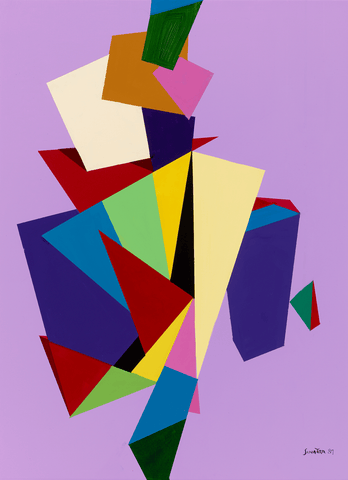
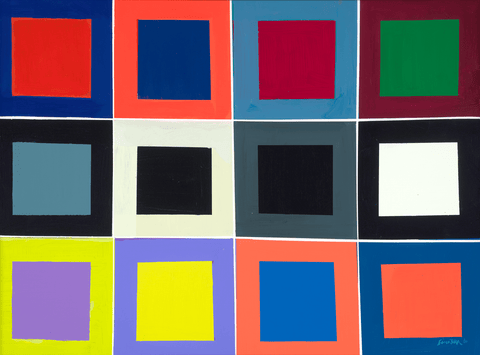
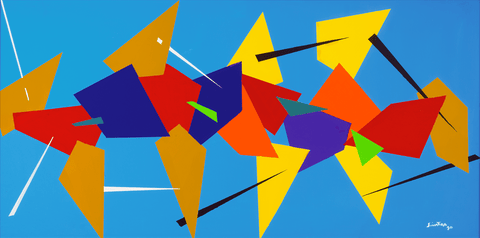
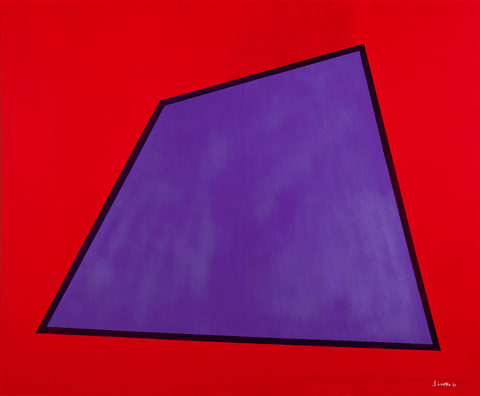
His bold style echoed the Abstract Expressionists he admired. He approached it with the same intensity and discipline he brought to his music, his perfectionism reflected in clean lines and geometric forms. The period from the 1980s until his death in 1998 marked Sinatra’s most prolific era as a painter.
Mediums and Techniques
Frank Sinatra worked in both oil and acrylic, appreciating acrylics for their fast-drying, versatile nature. This allowed him to paint in bursts of inspiration, capturing a mood before it slipped away. His measured artistic voice is rendered in bold geometric lines, vivid color fields and rhythmic structure, often painting subjects he loved, like trains or simply the color orange. When he found a pattern he liked, he would rework it in different color variations, exploring different emotions through hues. As his daughter Tina wrote in A Man and His Art (1991), “He is a fastidious person, a detail man, so he relishes the precision required to paint severe forms.”
Sinatra often painted while listening to classical music, or sometimes the news, and he was known to sketch constantly, even doodling in black marker on the finest restaurant tablecloths. He painted for himself, as well as for those close to him. If a friend mentioned they had an empty wall, Sinatra might pop up several weeks later with a canvas perfectly sized to fill it.
His relationship to art was physical. He disliked “hands-off” signs in museums, preferring to feel the contours of a bronze sculpture. Painting offered that tactile intimacy. “For Frank Sinatra,” Tina noted, “painting isn’t an intellectual pursuit—it’s visceral. It’s more intangible, more essential than that.”
What emerges from this practice is a “voice” that is unmistakably Sinatra: confident, composed and emotionally resonant. His paintings may echo modernist influences, but they also reflect the icon’s own cadences, translating a life lived in the spotlight into abstract meditations on memory, rhythm and feeling.
Exhibitions and Critical Reception
Frank Sinatra never sold his paintings. Instead, he gave them away to friends, coworkers, hospitals and charitable organizations. For him, painting was a personal act of generosity and expression. This spirit of kindness echoed throughout his life as a loyal friend and a vocal advocate for civil rights.
Over the years, his artwork has been exhibited at the Grammy Museum in Los Angeles and in galleries across the United States, drawing both fans and art enthusiasts alike. These exhibitions offered a rare glimpse into a private creative world, one that many were surprised to discover existed at all.
Reception was, at times, complicated by Sinatra’s towering celebrity. Some critics viewed the paintings as a mere indulgence of fame, quick to dismiss them as side projects. Yet others recognized the sincerity, emotional clarity and technical discipline behind his work. For those willing to look beyond the spotlight, the paintings revealed a quieter but no less compelling form of artistry.
Recognizing Sinatra as a visual artist deepens our understanding of his extraordinary creative range. Painting for more than forty years, he created works marked by introspection and control, offering a counterpoint to the larger-than-life persona the world knew. These works stand as authentic artistic expressions and provide a rare window into the inner life of a man who defined American culture.
Sinatra, Frank
Frank Sinatra changed the world. With a voice that defined an era and a presence that shaped modern celebrity, he became one of the most influential entertainers of the 20th century. From sold-out theaters to Oscar-winning performances to his iconic Rat Pack, Sinatra’s artistry changed American culture forever. What few knew, however, was that his creative expression extended far beyond the stage into the world of visual art. But long before the spotlight, he was just a boy from Hoboken with oversized ambition.
Early Life
Born on December 12, 1915, Sinatra weighed a whopping 13.5 pounds at birth. It was a traumatic delivery that left him with permanent facial scarring and a damaged eardrum. He grew up idolizing Bing Crosby and sang at family gatherings, gradually building the confidence that would define his stage presence. His mother, Natalina “Dolly” Sinatra, was instrumental in nurturing his talent. A respected midwife and a dominant force in local politics, Dolly made sure Frank had sharp clothes and good connections.
With his mother’s help, he joined a local singing group, the Hoboken Four, which gained national attention on the Major Bowes Amateur Hour in 1935. That exposure opened the door to radio work, nightclub gigs and eventually a spot with bandleader Harry James, followed by a fateful move to Tommy Dorsey’s orchestra, where Sinatra began honing the phrasing and breath control that would revolutionize pop vocals.
By the early 1940s, he was the voice of a generation. His 1942 solo debut at New York’s Paramount Theatre caused a frenzy with thousands of screaming fans packed the streets, initiating the cultural phenomenon dubbed “Sinatramania.” His songs, filled with vulnerability and longing, resonated with a nation at war. And at the height of his fame, Sinatra turned to painting. His striking body of works reveals a different kind of artistry, one that is deeply personal.
The Origins of an Artist
Frank Sinatra’s path to painting began quietly in the late 1940s or early 1950s. The multidisciplinary artist used this act as a therapeutic outlet. Painting became a space where he could step away from performance and reflect. This practice offered something music could not: a kind of release that didn’t strain his body or voice.
Due to his busy schedule, it wasn’t until the late 1980s that Sinatra began to take visual art more seriously. With his performing career slowing and increasing health issues, he found solace painting in his home near Palm Springs, California. It was something he could do alone in his room, and he deeply cherished that private time. It also became a quiet joy he occasionally shared with his children, and later, his grandchildren.
The Artist as a Collector
Sinatra became immersed in the world of visual art as a prominent collector, and surrounded himself with works by some of the 20th century’s greatest artists, including Pablo Picasso, Joan Miró, Marc Chagall, Childe Hassam and David Hockney. He even owned pieces by fellow crooner and occasional painter Tony Bennett.
Sinatra and his fourth wife, Barbara, amassed an impressive collection, which likely served as inspiration for his own work. Much to Barbara’s dismay, he acquired several clown paintings by Walt Kuhn. Sinatra often returned to the clown motif in his own compositions, referring to these as his self-portraits, perhaps drawn to the emotional complexity behind their masks.
His bold style echoed the Abstract Expressionists he admired. He approached it with the same intensity and discipline he brought to his music, his perfectionism reflected in clean lines and geometric forms. The period from the 1980s until his death in 1998 marked Sinatra’s most prolific era as a painter.
Mediums and Techniques
Frank Sinatra worked in both oil and acrylic, appreciating acrylics for their fast-drying, versatile nature. This allowed him to paint in bursts of inspiration, capturing a mood before it slipped away. His measured artistic voice is rendered in bold geometric lines, vivid color fields and rhythmic structure, often painting subjects he loved, like trains or simply the color orange. When he found a pattern he liked, he would rework it in different color variations, exploring different emotions through hues. As his daughter Tina wrote in A Man and His Art (1991), “He is a fastidious person, a detail man, so he relishes the precision required to paint severe forms.”
Sinatra often painted while listening to classical music, or sometimes the news, and he was known to sketch constantly, even doodling in black marker on the finest restaurant tablecloths. He painted for himself, as well as for those close to him. If a friend mentioned they had an empty wall, Sinatra might pop up several weeks later with a canvas perfectly sized to fill it.
His relationship to art was physical. He disliked “hands-off” signs in museums, preferring to feel the contours of a bronze sculpture. Painting offered that tactile intimacy. “For Frank Sinatra,” Tina noted, “painting isn’t an intellectual pursuit—it’s visceral. It’s more intangible, more essential than that.”
What emerges from this practice is a “voice” that is unmistakably Sinatra: confident, composed and emotionally resonant. His paintings may echo modernist influences, but they also reflect the icon’s own cadences, translating a life lived in the spotlight into abstract meditations on memory, rhythm and feeling.
Exhibitions and Critical Reception
Frank Sinatra never sold his paintings. Instead, he gave them away to friends, coworkers, hospitals and charitable organizations. For him, painting was a personal act of generosity and expression. This spirit of kindness echoed throughout his life as a loyal friend and a vocal advocate for civil rights.
Over the years, his artwork has been exhibited at the Grammy Museum in Los Angeles and in galleries across the United States, drawing both fans and art enthusiasts alike. These exhibitions offered a rare glimpse into a private creative world, one that many were surprised to discover existed at all.
Reception was, at times, complicated by Sinatra’s towering celebrity. Some critics viewed the paintings as a mere indulgence of fame, quick to dismiss them as side projects. Yet others recognized the sincerity, emotional clarity and technical discipline behind his work. For those willing to look beyond the spotlight, the paintings revealed a quieter but no less compelling form of artistry.
Recognizing Sinatra as a visual artist deepens our understanding of his extraordinary creative range. Painting for more than forty years, he created works marked by introspection and control, offering a counterpoint to the larger-than-life persona the world knew. These works stand as authentic artistic expressions and provide a rare window into the inner life of a man who defined American culture.

