Click to open Contents and Quick Look for this article. Click to close Contents and Quick Look for this article.
|
Contents
→ Heads of State and the Watch as a Political Instrument → Hollywood and the Watch as Character → Musicians, Athletes and the Watch as Trophy → The Auction Room: When Celebrity Provenance Transforms Value |
|
Quick Look
|
→ Heads of State and the Watch as a Political Instrument
→ Hollywood and the Watch as Character
→ Musicians, Athletes and the Watch as Trophy
→ The Auction Room: When Celebrity Provenance Transforms Value
→ What Makes a Watch Iconic vs. Simply Expensive
- Luxury watches evolved from practical aviation tools into symbols of power, prestige and cultural influence.
- Political leaders and celebrities helped transform iconic watch models into lasting status symbols.
- Hollywood films elevated watches beyond accessories, making them essential parts of character identity.
- Musicians and athletes often use luxury timepieces to celebrate achievement and shape personal branding.
- Celebrity ownership and provenance can dramatically increase a watch’s auction value and collectibility.
The Highflying Beginnings
The wristwatch is, and has always been, a status symbol. Its history is inseparable from both iconic makers and the figures who wore them.
The modern men’s wristwatch emerged through a practical problem. At the turn of the 20th century, Brazilian aviator Alberto Santos-Dumont found that fiddling around with his pocket watch mid-flight cost precious seconds, time he could not afford to lose.
He shared this frustration with his friend, Louis Cartier, who offered an elegant solution. In 1904, Cartier created a wristwatch that let Santos-Dumont keep his hands on the controls and his eyes on the horizon.

Left: Alberto Santos-Dumont photographed by Agence Rol. 1908. Source.
Right: Cartier Paris Santos Dumont Watch, comparable to the model worn. Circa 1970. M.S. Rau.
Santos-Dumont, already famous across Europe, wore the watch throughout his travels, and the trend caught on. WWI pilots and soon the general public followed, and the timepiece moved from pocket to wrist.
The wristwatch began as a celebrity product. Today, the accessory remains linked with icons who elevate watches. And watches, in turn, elevate their wearers.
Heads of State and the Watch as a Political Instrument
Built on precision and innovation, the wristwatch became a diplomatic gesture, a personal statement or even a strategic instrument.
Take Winston Churchill. Many of his timepieces were gifts from admirers, including Rolex founder Hans Wilsdorf, who presented him with a gold Datejust—the brand’s 100,000th chronometer—to honor his role in the Allied victory. Churchill was also famously devoted to his grandfather’s Breguet pocket watch, nicknamed “The Turnip.”
Though he had a select few favorites, he also amassed a remarkable collection, including his yellow gold world-time “Victory” watch by Agassiz and Louis Cottier. Commissioned by prominent Swiss citizens to honor his leadership during World War II, it later achieved $738,000 at auction. So, if you want to receive as many prestigious watch gifts as Churchill… well, winning a world war certainly helps.

Left: Winston Churchill. 1929. Source.
Right: Rolex Presidential Datejust 18K Gold Wristwatch, comparable to the model worn. Sold at M.S. Rau.
Watches have played important roles in global strategy. In 1943, the Office of Strategic Services (OSS) presented the Dalai Lama with a Patek Philippe Reference 658 on behalf of Franklin D. Roosevelt, a diplomatic gesture that helped build trust and goodwill during a pivotal moment in World War II. This exchange formed part of broader efforts that contributed to cooperation on strategic matters, including discussions surrounding a route through Tibet to support China’s resistance against Japan.
While Roosevelt gave out watches as a strategic play, other American presidents have worn luxury watches to signal power and cultivate connections, often through gifts. Most of John F. Kennedy’s timepieces came from close allies. His collection was predominantly in yellow gold and included an Omega Ultra Thin Ref. OT3980 from Florida Senator Grant Stockdale.
Confident in Kennedy’s future, Stockdale had “President of the United States” engraved on the Omega’s caseback before the election. His belief in his friend proved well-founded. It was this network of connections, along with his strong and polished image among voters, that secured the presidency.

Left: President John F. Kennedy, First Lady Jacqueline Kennedy, and their children John, Jr. and Caroline. Source.
The Omega "Ultra Thin" watch of U.S. President John F. Kennedy, called the "Stockdale watch". Engraved “President of the United States John F. Kennedy, from his friend Grant”. Omega Uhrenmuseum Biel/Bienne, Switzerland. Source.
Kennedy was also known to own a gold Bulova, a Patek Philippe, a gold Nastrix and a gold Rolex Day-Date from Marilyn Monroe, though he reportedly never wore it publicly to avoid scandal. He certainly wouldn’t have wanted to fuel tabloid rumors of their alleged affair.
First ladies understood the language of watches just as well. Jacqueline Kennedy Onassis transformed the Cartier Tank into an enduring symbol of refined taste, a sensibility later echoed by Carolyn Bessette-Kennedy, who also favored the Tank. Both women became icons of fashion, shaping trends for decades while asserting their influence in American politics.
Cartier’s Tank transcends politics, of course. The model is perhaps the most iconic of all watches to be worn by celebrities from almost any field, including but not limited to Muhammad Ali, Princess Diana Spencer, Michelle Obama, Andy Warhol, Truman Capote, Ralph Lauren, Steve McQueen, Ingrid Bergman, Yves Saint Laurent, Sofia Coppola, Angelina Jolie, Mick Jagger, Fred Astaire, the Kennedys... and many many more.

Left to right: Muhammad Ali, Source. Princess Diana, Source. Michelle Obama, Source. Andy Warhol, Source. Truman Capote, Source. Ingrid Bergman, Source. Angelina Jolie, Source. Mick Jagger, Source. Carolyn Bessette-Kennedy, Source.
Cartier Tank Française Rose Gold Watch, comparable to models worn. Sold at M.S. Rau.
Hollywood and the Watch as Character
Because the accessory can be so personal, many watches have taken on larger-than-life roles in the cinema, becoming far more than a prop.
Few characters have worn watches as iconically as James Bond. Sean Connery’s Big Crown Rolex Submariner Ref. 6538 set the standard for the aspirational dive watches, with later Bonds—George Lazenby, Roger Moore, Timothy Dalton, Pierce Brosnan and Daniel Craig—sporting timepieces from Rolex, Seiko, TAG Heuer and Omega.
Each watch aligned with the era, the technology and Bond’s persona: suave, resourceful and aspirational. From Connery’s gilt-dial Submariner to Craig’s custom Omega Seamaster Diver 300M 007 Edition, these watches evolved alongside 007 himself.

Left: Sean Connery as James Bond. Source.
Right: Rolex Submariner Two-Tone “Bluesy” Wristwatch, comparable to the model worn. Sold at M.S. Rau.
Worn by Steve McQueen in Le Mans (1971), the Heuer Monaco became an icon of motorsports and 1970s style. McQueen’s white Nomex racing suit often revealed just a glimpse of the square-cased chronograph, the “Chronograph Heuer” patch visible on the shoulder.
The pairing of a high-speed, high-stakes race with a cutting-edge sports watch was no accident: product placement pioneer Don Nunley recognized the power of aligning a timepiece with a lifestyle, helping shape what is now a multi-billion-dollar industry.

Left: Steve McQueen on set during the filming of the 1971 racing movie Le Mans. Source.
Right: Limited edition Steve McQueen CW2118 Monaco. Source.
While James Bond and Steve McQueen embody high-stakes sophistication, film also celebrates watches in more playful ways. Marty McFly’s Casio calculator watch in Back to the Future perfectly captures the film’s tech-savvy, futuristic energy.
Meanwhile, Jake Gyllenhaal wears a fascinating timepiece in Donnie Darko: the Casio CGW-50, one of Casio’s most complex watches. It tracks the planets of our solar system and Halley's Comet for 300 years, a subtle hint to the film’s themes on the passage of time.
Musicians, Athletes and the Watch as Trophy
For many musicians and athletes, a watch is a trophy of achievement. In hip-hop, the power of the wristwatch is quite literal: famous watch brands like Patek Philippe, Audemars Piguet and Rolex are name-checked repeatedly in lyrics, signaling wealth, influence and the rewards of perseverance. On the album Without Warning, 21 Savage, Offset and Metro Boomin mention “Patek” 15 times across 10 tracks.
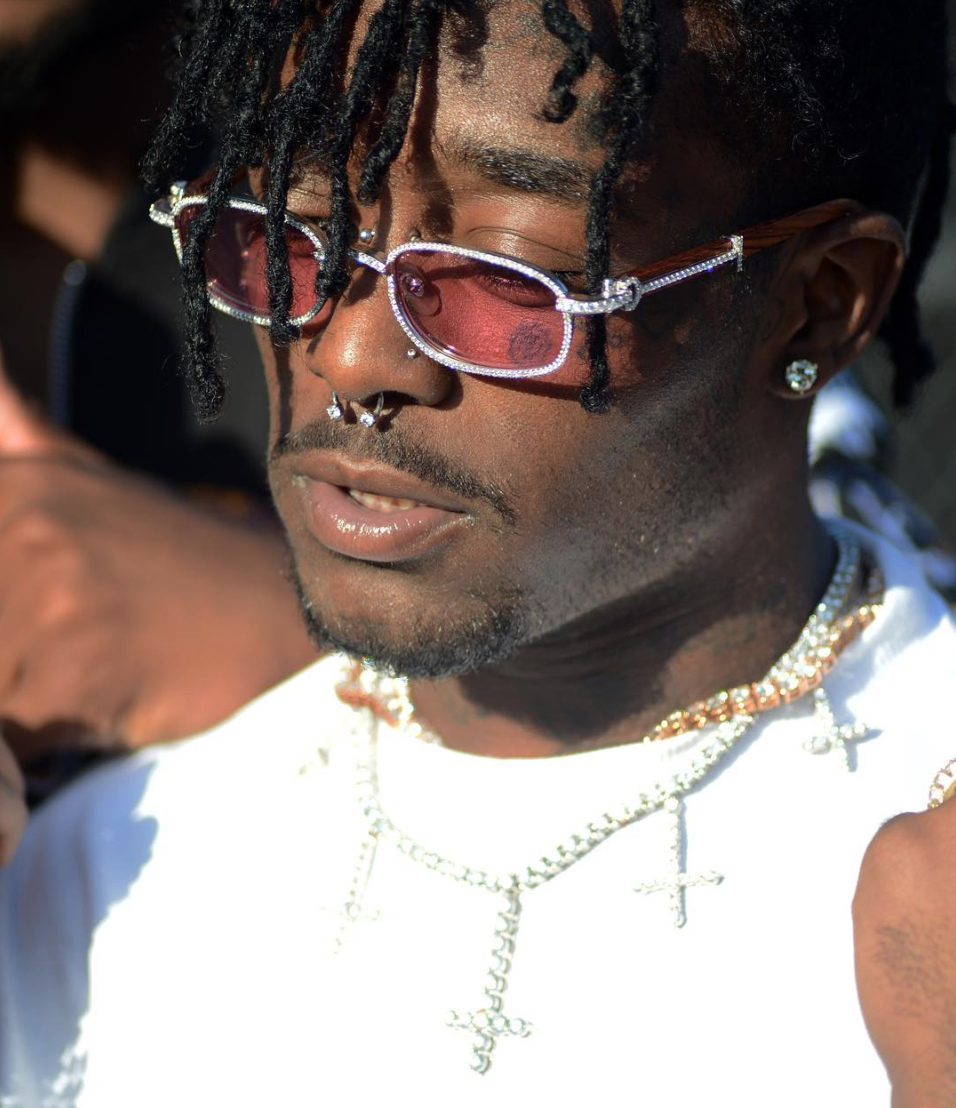
Kanye West, Jay-Z, Lil Uzi Vert, Post Malone and more have all used timepieces as a way to proclaim success, with references ranging from diamond-encrusted Nautiluses to more understated Pateks. As Offset raps on Darth Vader, he “bought the plain Philippe,” a nod to quiet luxury and the value of craftsmanship as much as flash.

Left: New Patek singer Lil Uzi Vert in 2017. Source.
Right: Patek Philippe Nautilus 5712/1A-001 Watch, comparable to the model worn. Sold at M.S. Rau.
Some of the world’s most iconic watches have become synonymous with celebrity influence. Audemars Piguet’s Royal Oak, especially the oversized “Jumbo,” is a favorite among larger-than-life figures like Jay-Z, LeBron James, Michael Schumacher and Arnold Schwarzenegger. Elvis strapped on a Hamilton Ventura for Blue Hawaii, blending futuristic style with cinematic flair, while Miles Davis preferred his Breitling Navitimer as a constant through decades of music and personal reinvention.

Left: LeBron James in 2007. Source.
Right: Audemars Piguet Royal Oak Jumbo Ultra-Thin Wristwatch, comparable to the model worn.
Athletes often sport watches to show accomplishment or to promote brand sponsorships. LeBron James collaborated with Audemars Piguet to produce a limited-edition Royal Oak Offshore, complete with rose gold, titanium and diamond-set pushers.
Serena Williams is often seen wearing various Audemars Piguet Royal Oak models, both on and off the court. The prestigious Swiss watch brand chose her as an ambassador for her confidence, authenticity and passion. Michael Phelps’ Omega Seamaster Planet Ocean celebrates his wins, marrying high-performance engineering with personal branding. David Beckham, blending athletic achievement and style, is closely associated with Tudor, particularly the Black Bay S&G.
The Auction Room: When Celebrity Provenance Transforms Value
While watches remain one of the most solid investments among accessories, adding a layer of celebrity provenance can skyrocket their value.
Few examples are as legendary as Paul Newman’s personal Rolex Daytona, a watch line he made famous. Originally a gift from his wife, Joanne Woodward, when Newman took up racing in 1972, the Daytona would come to define the actor’s style and his name.
The watch itself—a Reference 6239—was a $210 timepiece at its debut in 1963. Its caseback features an engraving that reads “Drive Carefully Me.” Newman wore it constantly before eventually passing it on to James Cox, his daughter Nell’s former boyfriend. In 2017, the watch sold at auction for a record-breaking $17.8 million, a strong argument for being polite to your girlfriend's dad.

Left: Paul Newman at the United Nations in 1978. Source.
Right: Rolex White Gold Cosmograph Daytona Watch with Meteorite Dial, comparable to the model worn. M.S. Rau.
Celebrity provenance repeatedly demonstrates its power at auction. Sylvester Stallone’s Patek Philippe Grandmaster Chime, which sold for $5.4 million in 2024, highlighted the actor’s taste for rare complications. Steve McQueen’s Heuer Monaco, immortalized in Le Mans and Elvis Presley’s Omega have also commanded extraordinary prices, their cultural resonance enhancing value far beyond technical merit alone. Even historical figures like Bao Dai, the last emperor of Vietnam, added allure to a Rolex that sold for $5 million at Phillips in 2017.
Yet, the market also recognizes the enduring appeal of horological excellence for its own sake. Top-tier makers such as Jaeger-LeCoultre, Vacheron Constantin and Patek Philippe continue to captivate collectors who prize movement, complications and design over celebrity. The current world record underscores this: the Patek Philippe Grandmaster Chime Ref. 6300A-010 sold for $31.19 million, celebrated for its reversible case, 20 complications and two dials.
What Makes a Watch Iconic vs. Simply Expensive
A watch becomes iconic through a combination of design, rarity and the story it carries, especially when worn by the right person at the right time. The more you learn about watches, the more fascinating they become, with no shortage of complications and fascinating features that continue to revolutionize the field.
At M.S. Rau, you can explore examples with distinguished celebrity provenance, as well as never-before-worn technical masterpieces in near-mint condition. Explore our watch collection today, from entry-level luxury to rare treasures for the dedicated collector, and seize the chance to own work that defines horological history.